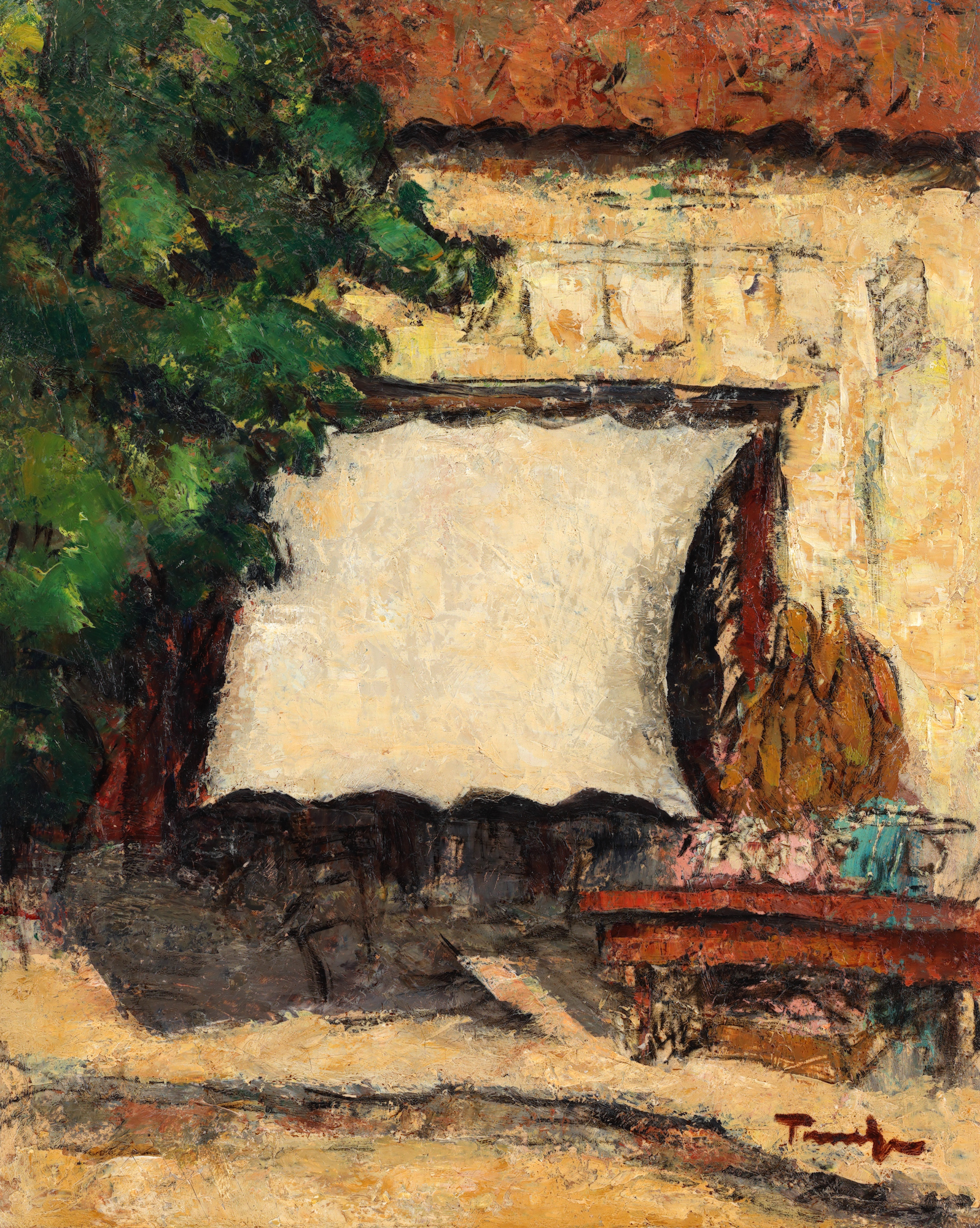
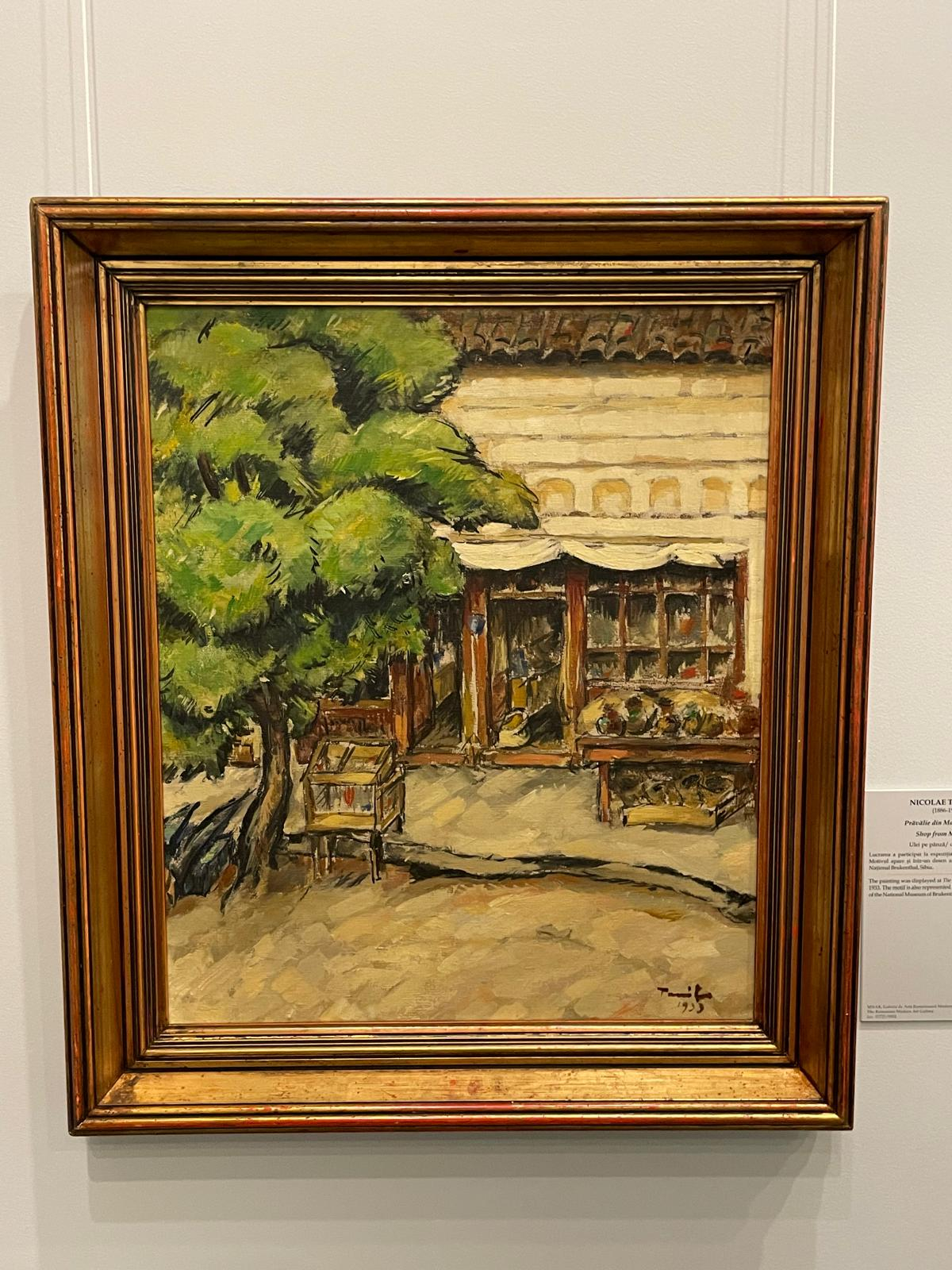
38. Mangalia Shop [1927-1929]
-
Nicolae Tonitza
lot.not_sold:
—
lot.shop-sell-price:
—
- signature
- signed lower right, in brown, "Tonitza"
- medium
- oil on cardboard
- description
- The year 1925 marks the moment Nicolae Tonitza first met the small settlement on the Black Sea coast: Mangalia - a location the artist would return to year after year until 1930. His recurring trips to the Dobruja region open the way to a vast journey of landscapes, among which we distinguish mainly the sweltering shore flooded with sunlight. However, Tonitza's wanderings throughout Dobruja will not necessarily materialize in the form of seascapes, but will mostly take humble forms that will be transposed into his work as slum corners, peasant interiors, houses, cafes or courtyards. A painter of the atmosphere, Tonitza captures in just a few strokes the local color and masterfully imprints the Dobrujan light into canvases whose genesis is attributed to the space on the Black Sea coast. In his radio intervention in 1932, transposed into a vast essay of no less than twelve pages, Tonitza emphasizes the importance of the pioneering-innovative painter in revealing and popularizing spaces that will subsequently enjoy a distinguished reputation. He insists, therefore, on promoting the concept of the vacationing artists in search of yet unexplored places, which they can inaugurate, for the first time, in their specific painterly manner. Nicolae Tonitza thus reveals himself with equal passion both in his painted or drawn work and in his written work. The correspondence of the two will result in common means and equivalent spheres of interest in representing the artist's reality. The art critic Tonitza reserves the right to revisit, in writing, his art work already configured. His comments are designed to outline, explain or enhance the creative potential of the painter or draftsman. Therefore, there is an analytical double entendre whose final purpose consists in realising art for art, art for the people, but also art for oneself. Dobruja remains, for the artist, one of the most picturesque provinces, but by its ethnic appearance, it presents the lowest Romanian specifics. In the landscapes created at this stage of creation, Tonitza often appears meditative, in prolonged contemplation of the subject that he is about to transpose onto canvas. The sweltering afternoons in Dobruja and the blistering sunbaths on the Black Sea coast contribute to deepening the calling of color, color which the artist uses both as a means of expressing ideas and as a way of illustrating the deepest feelings. The specific feature of Tonitza's landscapes will, however, remain the absence of the human element. Most likely conceived during the period 1927-1929, thus at a stage where the artist had already begun to familiarize himself with the secrets of the small Black Sea settlement, the present work becomes representative by the strength of the subject, by the sure strokes, prodigiously laid in intense shades, specific to the oriental atmosphere.
- bio
- TONITZA, Nicolae, "Mangalia painted in words", 1932, "Radio University", handwritten text, SSR Archive, file 11/1932. ȘORBAN, Raul, "Nicolae Tonitza", Meridiane Publishing House, Bucharest, 1965. BREZIANU, Barbu, "N.N. Tonitza", Meridiane Publishing House, Bucharest, 1986.
- dimensions
-
- width: 39.5 cm
- height: 49.5 cm
- dating
- 1927-1929