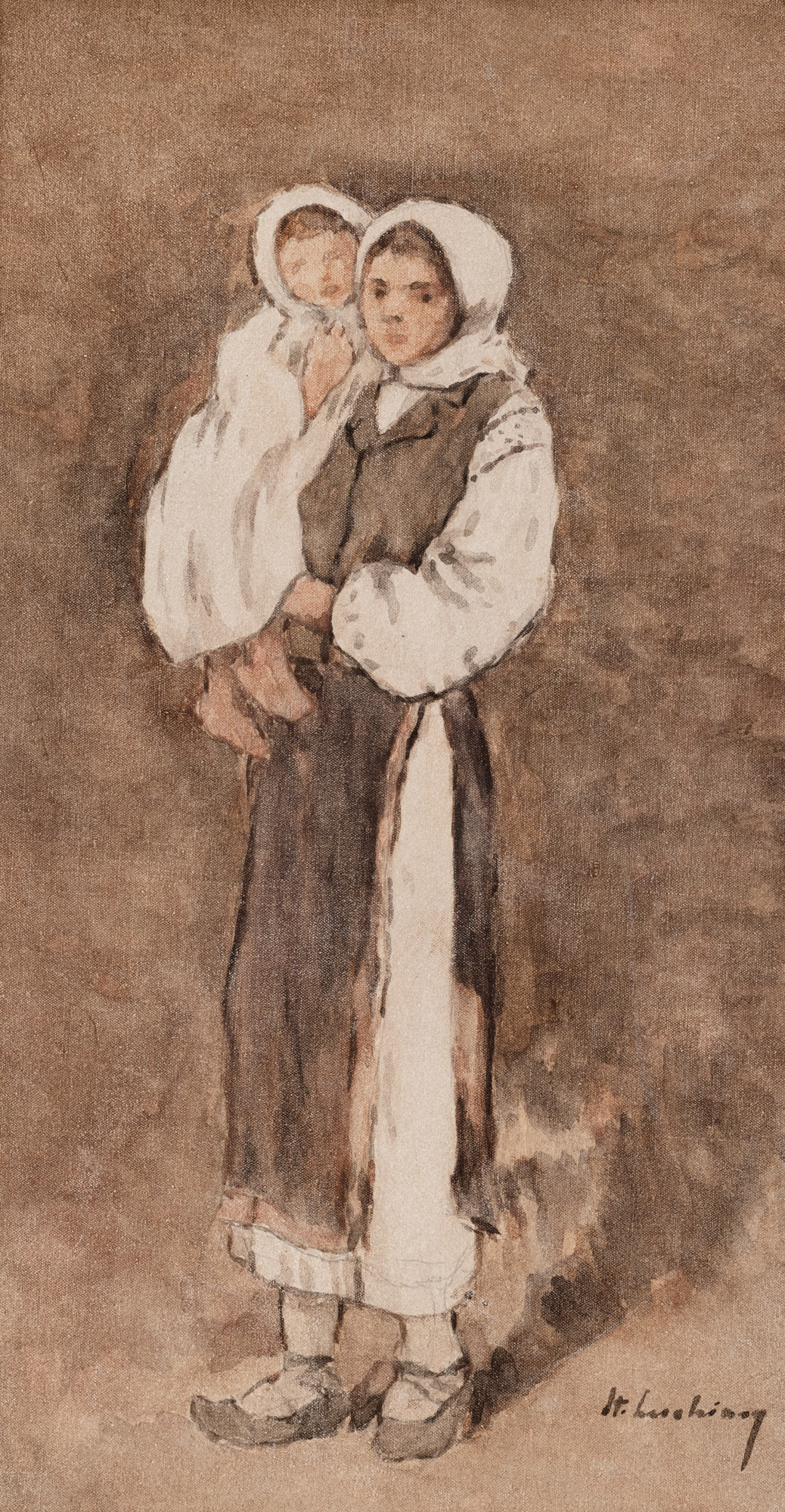
15. Maternity [cca. 1900]
-
Ştefan Luchian
lot.estimate:
12.000,00 EUR
- 18.000,00 EUR
lot.sold:
12.000,00 EUR
- signature
- signed lower right, in brown, "St. Luchian"
- medium
- watercolor and pencil on canvas glued on cardboard
- description
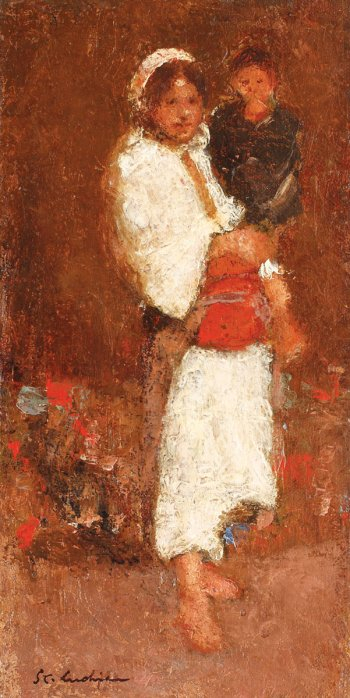
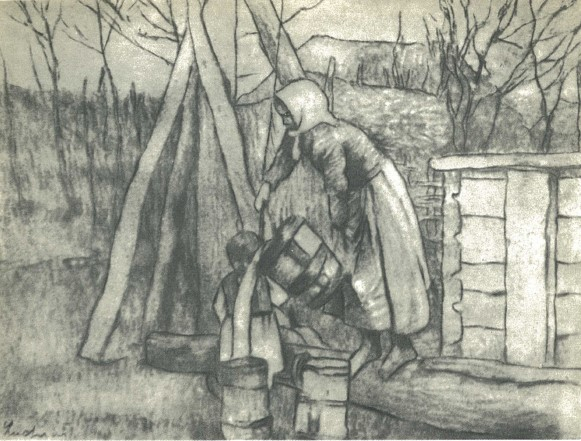
- Alongside his two younger brothers and neighborhood children, Stefan Luchian often found himself playing on the streets adjacent to his home and would often embark on so-called expeditions to Podul Vergului, Obor or the Negustorilor district. On Sundays, he used to venture on the church road, where he was sometimes allowed to ring the big bell. Although he is the son of a former major-commander of the garrison in Stefănești, Luchian did not follow the courses of the Infantry School, but simultaneously studied Fine Arts and the Conservatory. From his early creation period dates a series of portraits dedicated to his family members, executed either after a model or after photos. We mention here the works dedicated to his mother, whom he transposes in the middle of rural landscapes, with her body stretched out on the grass, or whose features he sketched in portraits. He represents with the same interest faces he encounters in his daily existence, but also villagers, flower girls or nomads. However, the musicality of his plastic work is mainly transposed in the physiognomies and female faces. He often captures elegant, mysterious, graceful women who seem to "pose for a picture", with obvious influences of French impressionism. The artist also stands out in self-portraits, where he adopts a more sober palette and relies on the rendition of severe shadows. Although the portraits made by Luchian are often individualized, they become representative for an entire social category. In his vast portrait work, the artist captures human drama, faces burdened by thoughts and looks ground by the emotional dramas of his characters. From mothers holding their newborns to their chest and up to the deep love postures revealed by the tight embraces between mother and child, maternity has often been interpreted as a symbol in art. The oldest cartographers of the theme date back centuries, and among the first identified representations is the Virgin Mary with the child in the catacombs of Priscilla in Rome. We find the subject taken up by world-renowned artists such as Michelangelo, Renoir, Dorothea Lange, Paul Cézanne, Gustav Klimt, Mary Cassatt and others. However, from the "Madonna with the Child" to Luchian's "Lăutul", the subject has evolved and taken various forms and meanings. Stefan Luchian revisits, as we mentioned, the theme of maternity in works such as "Lăutul", "Țărancă cu copil" or "La fântână". Simplicity and closeness to a very human gesture, moments of maximum intimacy or the feeling of motherly love predominate here. This work brings together two themes often encountered in the artist's creation: maternity and village life. We thus note the figure of the mother represented in popular clothes, and maternal care exemplified by the way she carries her child in her arms.
- bio
- LASSAIGNE, Jacques, "Ștefan Luchian", Meridiane Publishing House, Bucharest, 1972. CIUCĂ, Valentin, "Following the footsteps of Ștefan Luchian", Pim Publishing House, Iasi, 2016.
- dimensions
-
- width: 19 cm
- height: 35.5 cm
- dating
- cca. 1900