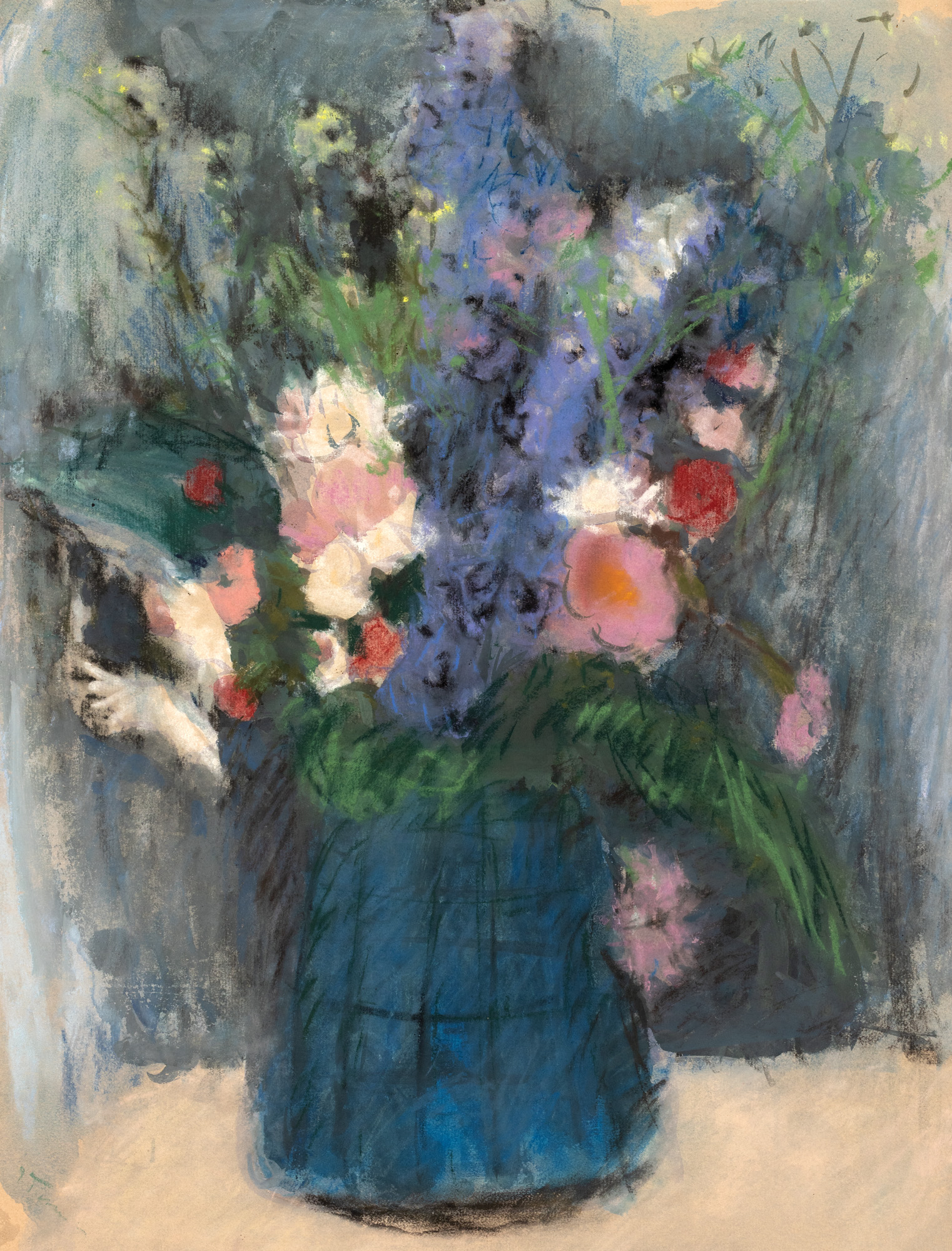
53. Wildflowers [cca. 1938]
-
Ion Ţuculescu
lot.estimate:
3.000,00 EUR
- 5.000,00 EUR
lot.sold:
3.250,00 EUR
- signature
- signed bottom left, in blue, "I. Țuculescu"
- medium
- watercolor and pastel on paper glued to cardboard
- description
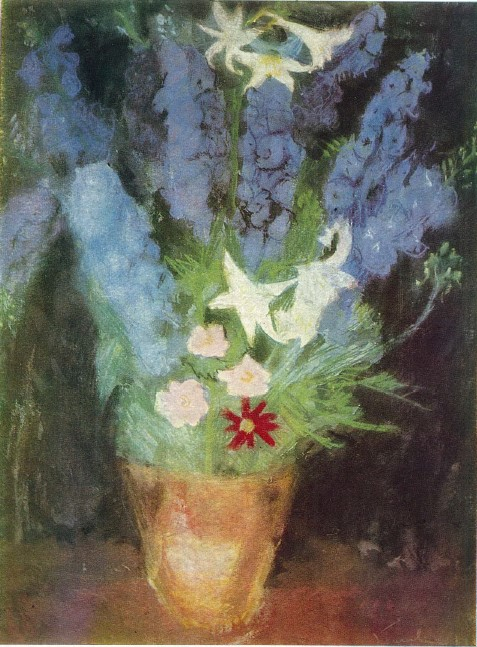
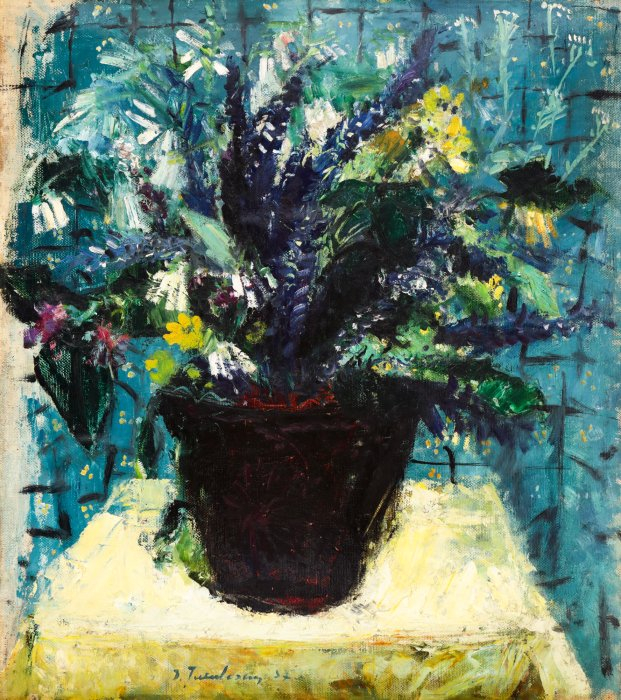
- The present artwork dates from the artist's reencounter with painting, a period profoundly marked by the intensity of color. Țuculescu graduated from medical school "magna cum laude" and began his career as a natural science teacher. However, his chosen career path would still allow him to continue dabbling in painting. He made his debut as a painter in 1938, during a solo exhibition held at the Romanian Athenaeum. The exhibition aroused the curiosity, interest, and admiration of critic George Oprescu, as well as the appreciations of Gheorghe Petrașcu. Gifted as an autodidact, he conducted free studies, "from nature and masters", as he himself says. He would use his dual vocation, as a biologist and creator, to transcribe true pages of nature onto the canvas with the ingenuity of a scholar. He retraced the travels of his predecessors in the Mediterranean East and the significant western capitals, thus regaining the visual material necessary for future plastic experiments. He drew inspiration from Petrașcu, Andreescu or Luchian, but also focused on a Van Gogh or a Gauguin. His plastic space, infinite and with unusual materializations, is crossed by an artificial brightness and a brutal chromatic intensity that became a leitmotif. His ornamental harmonies are inlaid with accents of black, a shade assimilated from Petrașcu's works. He keeps recognizable fragments of the real space he draws inspiration from, but modifies them according to his own stimuli. From rapeseed fields and views of Romanian villages to Venetian canals, stone bridges, and coloured buildings of Italy, Ion Țuculescu takes us on a welcome journey around the world with his works. Whether he is working in oil or transplanting the urban landscape into watercolour, the artist aims to transform the sheet into a visual diary of his own life. The series of vases with flowers, specific to his debut, stands out through a much duller chromatic range compared to the one adopted by the artist in his famous rapeseed fields. It is, therefore, a period of search and rediscovery, a period of establishing the artistic direction. The vase with flowers, predominantly composed of shades of blue, reveals the botanist passionate about science and fine details. In the history of Romanian art, Ion Țuculescu remains the amateur who became a professional, with an immeasurable power to revitalize the outdated stylistics of folk art.
- bio
- LASIU, Ion, "Ion Țuculescu"; Meridiane Publishing House, Bucharest, 1966. COMARNESCU, Petre, "Țuculescu"; Meridiane Publishing House, Bucharest, 1974. CÂRNECI, Magda, "Ion Țuculescu", Meridiane Publishing House, Bucharest, 1984. DAVIDESCU, Cătălin, "Ion Țuculescu. Reconstruction", MNAC Publishing House, Bucharest, 2020.
- dimensions
-
- width: 47 cm
- height: 61.5 cm
- dating
- cca. 1938