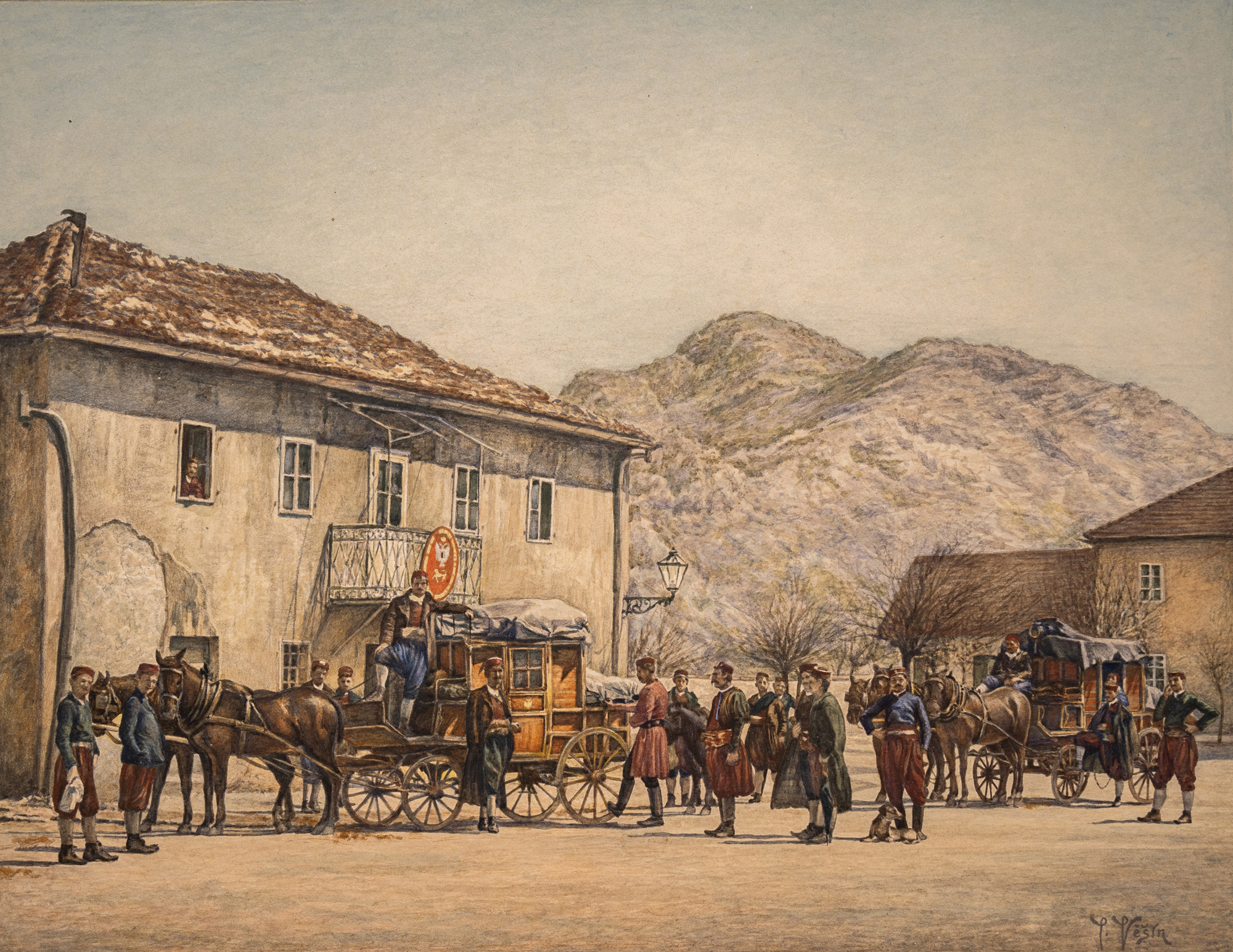
1C. Arrival of the post in Cetinje [1890s]
-
lambidis-silverware lambidis-silverware
lot.sold:
5.000,00 EUR
lot.estimate:
1.000,00 EUR -
1.800,00 EUR
lot.sold:
5.000,00 EUR
- signature
- signed bottom right, in pencil, "J. Věšín"
- medium
- watercolour, gouache and pencil on paper
- description
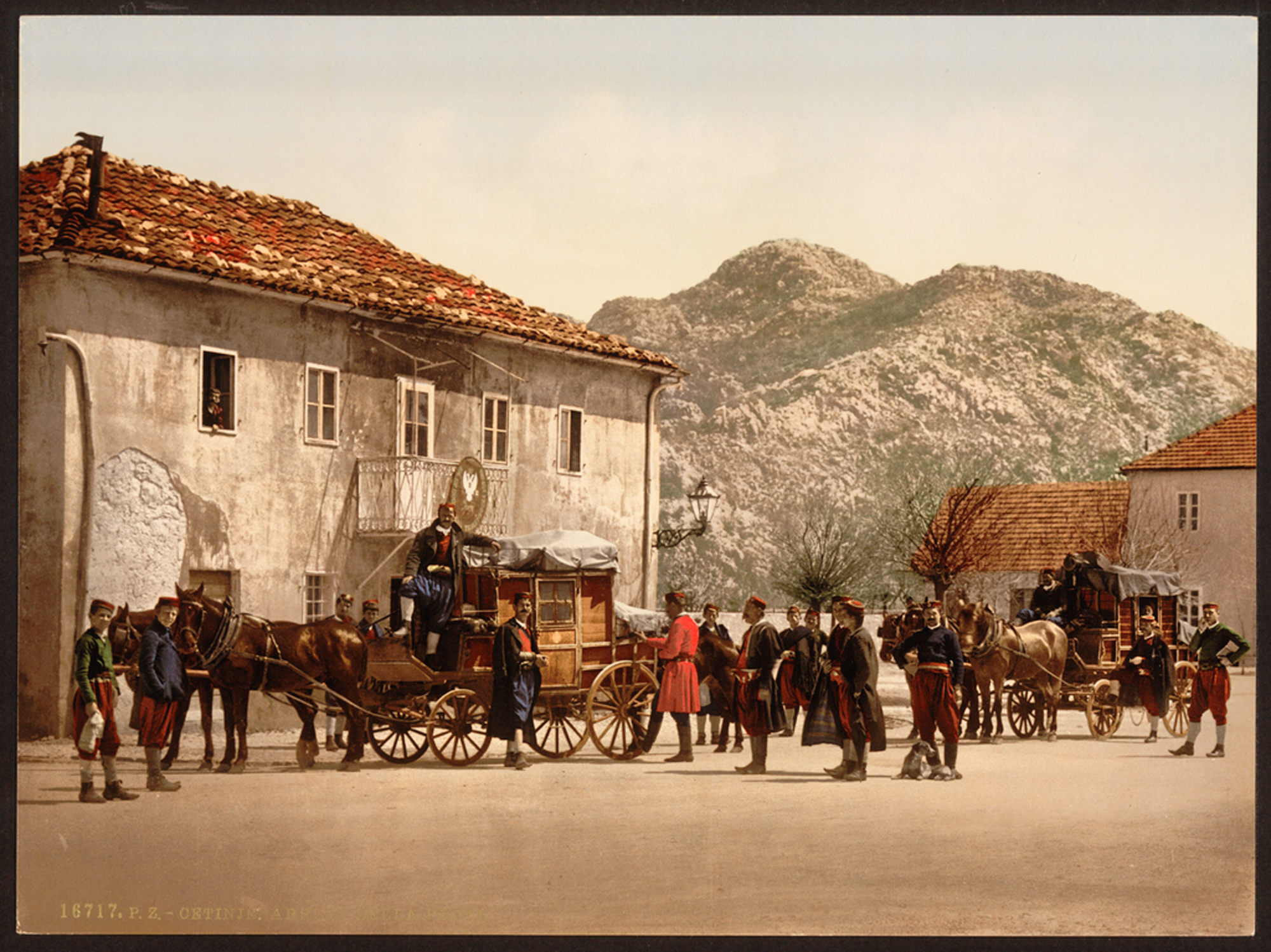
- Arrival of Mail at Cetinje" by late 19th-century Czech artist Jaroslav Vešin shows the artist in the light of a skilled watercolorist who recreates on paper the photograph published in the album "Views from Montenegro" published by the Detroit Publishing Company during the same period. The Detroit Publishing Company was formed in the late 19th century by publisher William A. Livingston and photographer Edwin H. Husher, who obtained the rights to photochromic technology for coloring black-and-white photographs, originally developed by the Swiss Hans Jacob Schmidt for the Orel Fusli Company & Companies. The Detroit Publishing Company became famous for its large assortment of photochromic color postcards, which, through the photolithography process, allowed for mass printing in albums, magazines and newspapers. The album "Views from Montenegro" presents scenes and landscapes from the recently liberated country from Ottoman rule. The photograph "Arrival of mail in Cetinje" presents an incident from the capital of Montenegro in this period, where several mail wagons arrived at the square, where the local residents were waiting for them. The town of Cetinje itself is located in an extremely mountainous part of the country and according to Karl Baadecker's 1900 travel guide Austria: Including Hungary, Transylvania, Dalmatia and Bosnia - it took at least two days to travel from the capital to the other nearest town Kotor. That is why it can be assumed that the route of the post wagons was long and difficult, and the locals also had to be patient to receive their mail. Already as a young artist, Yaroslav Veshin worked skillfully with watercolor and gouache, as similar works with the same technique exist from this period, depicting landscapes of settlements in Central and Eastern Europe. A good example is the Veshin watercolor of the Czech town of Tršebić from the same period. From Mara Tsoncheva's book from 1955 "Yaroslav Veshin, Life and Creativity" we understand that such "cards" works were a frequent phenomenon in the work of the Czech artist: "Forced due to the little money he received from his father, he himself taking care of his living, the young lad works illustrations for newspapers and magazines...” It is possible that the then young artist was commissioned to recreate the photograph from the album of the Detroit Publishing Company, which was widely distributed in newspapers and magazines. At the end of the 19th century, Central European countries such as the Czech Republic and Germany (the countries where Jaroslav Veshin spent the most time in this period of his life) had a huge interest in the rapidly developing and turbulent situation in the Balkans. The possibility that Veshin was tasked with skillfully and verbatimly recreating the color photography of the Detroit Publishing Company is not at all small. The Czech artist works with great attention to detail in recreating the clothing, poses and facial features of all the figures depicted in the original image, as well as skilful handling of light and shade. Bearing in mind that color photographs in this period were extremely rare and a novelty, Veshin literally recreates the brightness and radiance of the colors in the clothes of the figures in the picture, as well as the surroundings. This type of detail is also emphasized in photochromic images, thanks to new technologies such as photolithography, and the young Veshin shows exceptional skill in his work and understanding of the watercolor technique, faithfully and convincingly recreating them on paper. (M.Z.)
- bio
- Tsoncheva, Mara (1955). Yaroslav Veshin, life and work. Sofia: ed. Bulgarian artist
- dimensions
-
- width: 28 cm
- height: 21 cm
- research_info
- The artwork corresponds to the requirements for cultural value, according to an expert identification certificate.
- dating
- 1890s
INFORMAȚII SUPLIMENTARE
Fotografiile lotului sunt informative și orientative, neputând să asigure o vedere extrem de detaliată a obiectului din toate unghiurile. Recomandăm inspectarea fizică atentă a lotului înainte de licitare. Informații suplimentare în legătură cu starea de conservare, altele decât cele evident vizibile în fotografia/fotografiile lotului, disponibile pe calea formulării unei solicitări aici.
Pentru neclarități în legătură cu procedura de licitare, costurile adjudecării, termenii de garantare, de plată și de ridicare a lotului adjudecat recomandăm citirea/recitirea cu atenție a Regulamentului de Licitare.
Pentru informații suplimentare în legătură cu lotul și licitația contactați Departamentul de Consultanți de Artă.