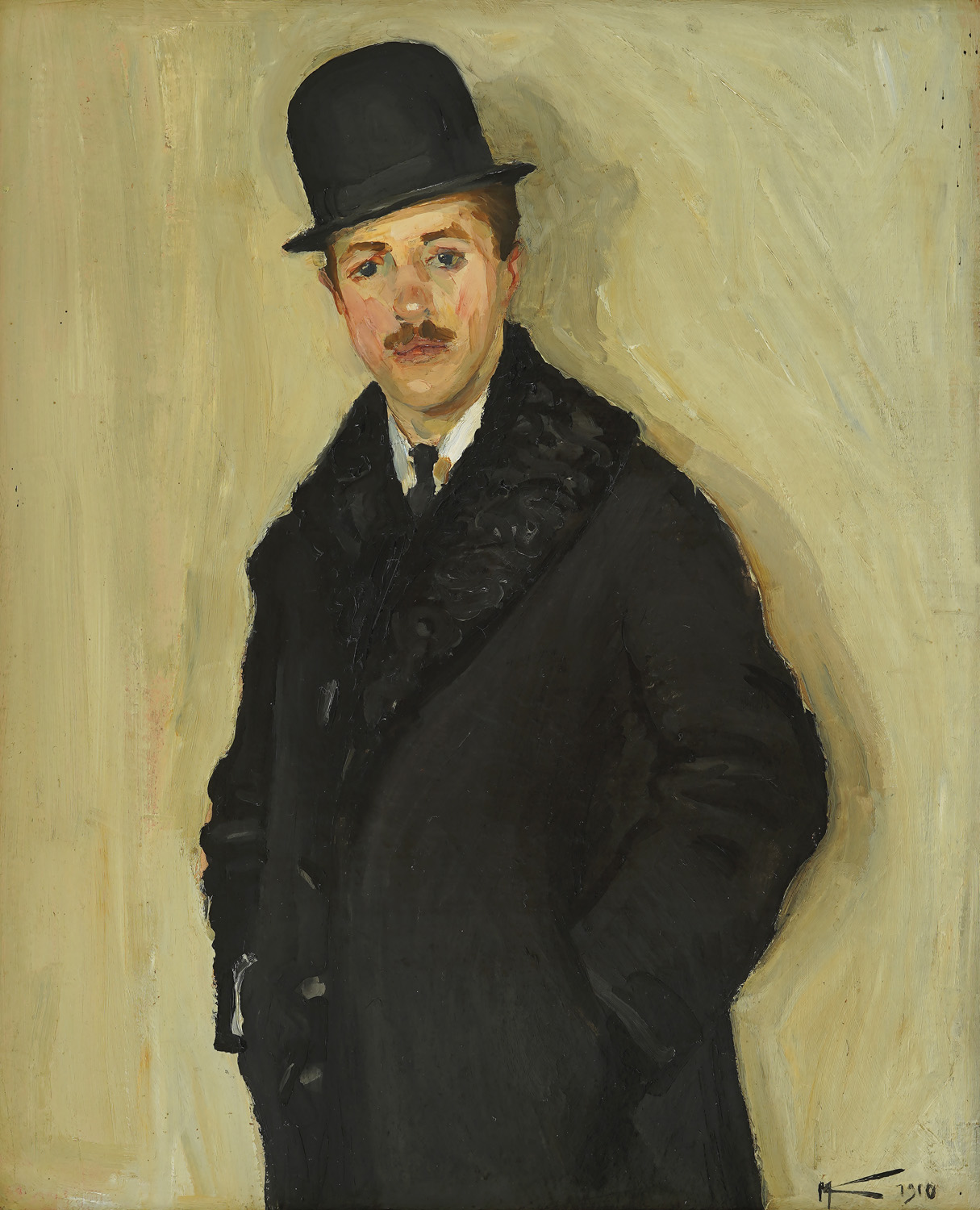
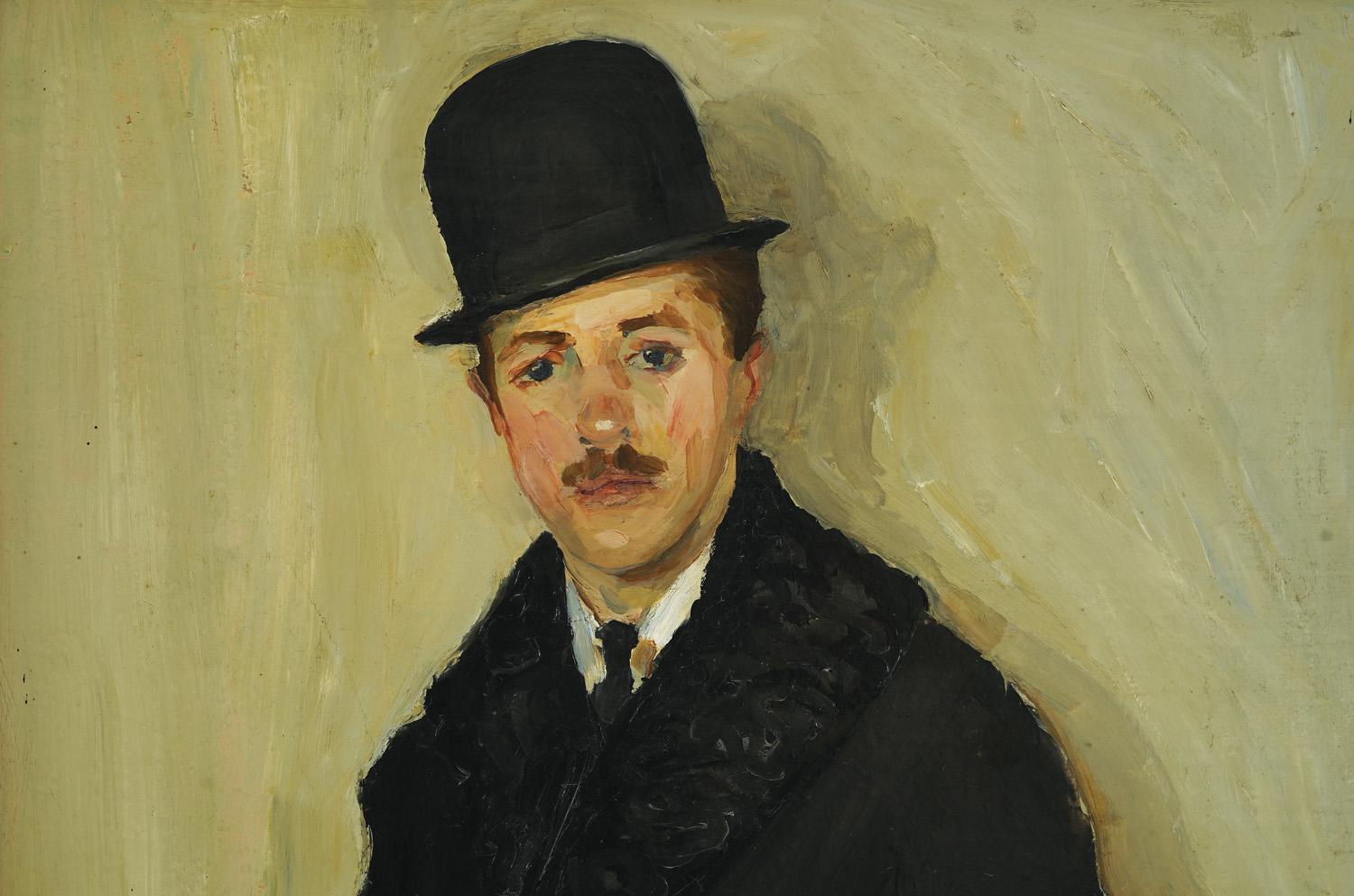
60. Portrait of Ferdo Ivanuš [1910.]
-
octavian-olariu octavian-olariu
lot.estimate:
60.000,00 EUR
lot.estimate:
60.000,00 EUR -
90.000,00 EUR
lot.not_sold:
- signature
- signed with initials and dated lower right, in black, "MK 1910"
- medium
- ulje na kartonu
- description
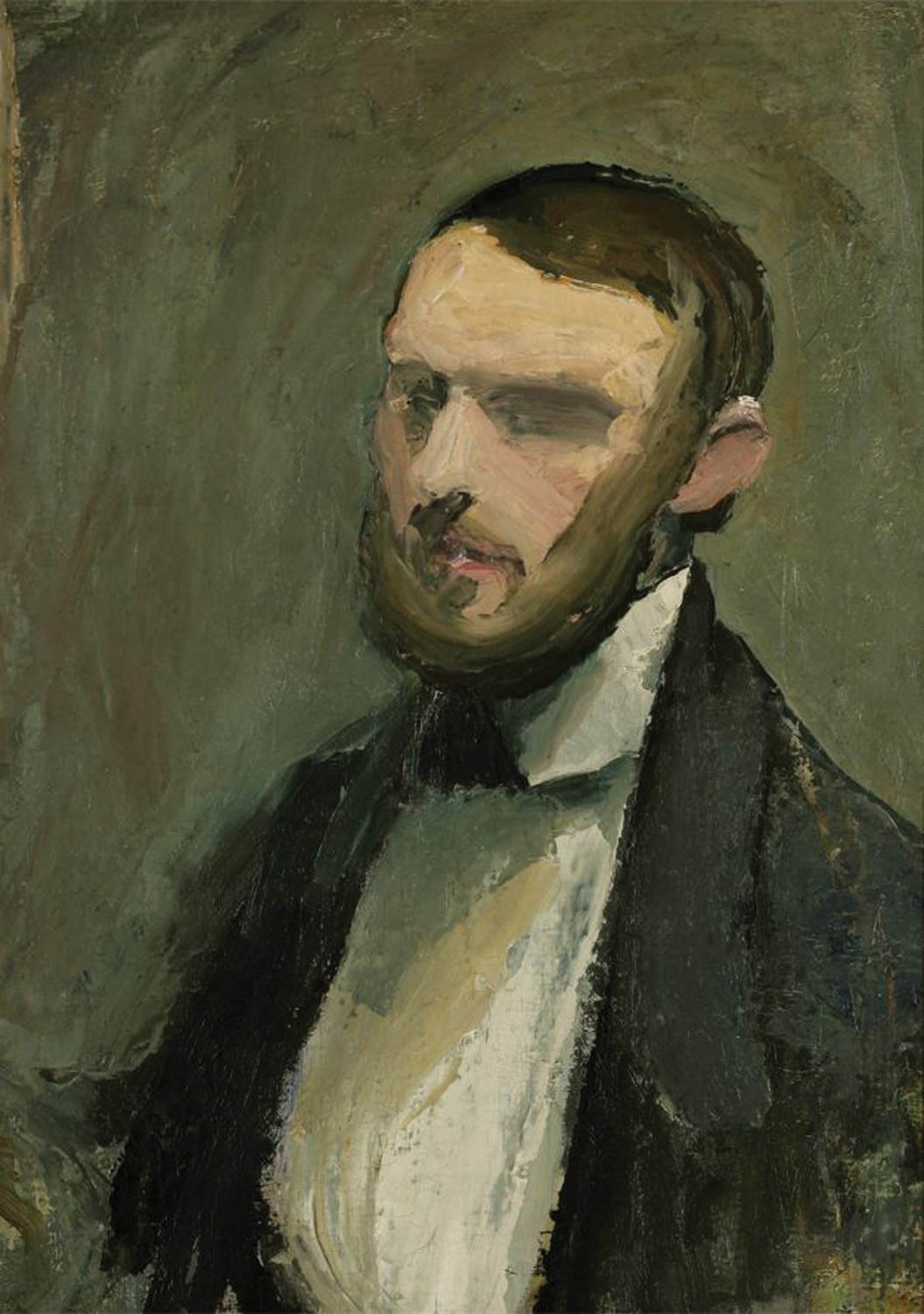
- This so far little-known oil painting by Kraljević was painted in (Slavonian) Požega in late autumn 1910, in his Požega studio, which he set up in the courtyard of the Kraljević house located on the main city square. It was during the time after his return from Munich, where he finished painting studies at the Art Academy in the class of Professor Hugo von Habermann. The broad drawing and realistic positioning of the male figure – dressed in a winter coat with a fur collar painted in a dark range of blacks with gray reflections and the background wall painted with small gradations of ochre – clearly show that in addition to Habermann's tuition, Kraljević in Munich discovered and loved both Wilhelm Leibl's tonal modulation and the silvery shine of Diego Velázquez's palette. However, Kraljević's painting path does not end on these stylistic determinants. As early as the following autumn, more precisely from the arrival in Paris in early September 1911, a transformation of expression began in his painting. The proximity of Cézanne's heritage, the lights of boulevards and parks, and the hitherto unseen sights from the metropolis's cultural and nightlife provoked the painter's innovative nerve to turn to new topics and become the creator of a personal style based on the fusion of Cézanne'sism and Expressionism. The man portrayed in this Kraljević's painting is a lawyer Ferda Ivanuš who finished his law studies in Vienna. He played the violin and enjoyed concerting as a hobby. At the time the portrait was made, he was a court clerk in Požega, and later a respected owner of a law office in Bosanski Šamac until the collapse of the Habsburg monarchy. Miroslav Kraljević painted his first and last major self-portrait, both masterpieces – "Self-Portrait with a Dog" in Munich in 1910 at the end of academic education, and the expressionist "Self-Portrait" in Zagreb in 1912, six months before he died of tuberculosis. In the past century that began with a series of opposing artistic invocations, radical changes, and mixes of artistic movements, on one hand, there were progressive successors of the painting medium and traditional art that evolved modernism with their creativity, and on the other hand, there were revolutionaries and declassifiers of tradition who inaugurated the avant-garde. Kraljević, tangled in the invocations of changes at the turn of the 19th and 20th centuries, goes to the moderns of a peculiar kind and superior painting personalities who surpassed national borders. Among them, because of the crucial Kraljević's impulse for a new direction of Croatian painting, the supreme importance of his opus doesn't fade even today. During the painting fulminant Paris year (1911/1912), the young twenty-six-year-old painter was caught by the epochal involution of feeling. The new state of mind with new content and form potential and the Paris art scene of the first decade of the 20th century provided him with an inexhaustible source of motifs, gave the basis for a "new sensibility" in expression, and revealed to him the charms of a life without borders. Starting from his hometown Požega, via Vienna and Munich, he arrived in Paris, experienced the charms of flânerie and adopted the values of pure painting. By painting the world of the modern metropolis and selves in it, he joined the European flow of questioning his own fate and feelings with enviable expressiveness, and created a work that precisely the Paris part of which is the painting peak of the Croatian modern art. With Kraljević's portraits and self-portraits, Croatian painting modernism and the identity of its leader are deeply embedded into the cosmopolitan production of modern Europe, just like centuries earlier, the giants Julijo Klović and Andrija Medulić embedded their identity and works in the peaks of the European Renaissance. The paintings of Miroslav Kraljević, originated in Croatia and reached its fortissimo in France, have enriched us and we rightly take pride in it. His work, in addition to reflecting the painter's modern identity and high artistic horizons, also celebrates the cosmopolitan nature of the art scene before the Great War and affirms the values of the European cultural circle that were taken over by artists in Croatia, often building them synchronously. BRP
- bio
- Igor Zidić, Miroslav Kraljević / Short road along a long path (exhibition catalog in Adris Gallery), Adris Group, Rovinj, 2004. pp. 6-8 Nikša Nezirović, Monograph of Bosanski Šamac / from the earliest times to 1945., Šamac, 2011.
- dimensions
-
- width: 35 cm
- height: 43 cm
- research_info
- The work is accompanied by an expertise by Igor Zidić from 1998. The portrait depicts the lawyer Ferdo Ivanuš. After studying law in Vienna, Ivanuš becomes a court clerk in Požega, and later a respected owner of a law office in Bosanski Šamac until the collapse of the Habsburg Monarchy. On the back of the work, there is a statement by the daughter of Kraljević's model: "I can confirm that this was painted by Miroslav Kraljević and that the picture represents my father Dr. Ferdo Ivanuš in el. Požega 1910. year / (?) Nada"
- dating
- 1910.
- provenance
- Historical collection of Dr. Ferdo Ivanuš; part of a significant private collection in Zagreb for the last 30 years.
INFORMAȚII SUPLIMENTARE
Fotografiile lotului sunt informative și orientative, neputând să asigure o vedere extrem de detaliată a obiectului din toate unghiurile. Recomandăm inspectarea fizică atentă a lotului înainte de licitare. Informații suplimentare în legătură cu starea de conservare, altele decât cele evident vizibile în fotografia/fotografiile lotului, disponibile pe calea formulării unei solicitări aici.
Pentru neclarități în legătură cu procedura de licitare, costurile adjudecării, termenii de garantare, de plată și de ridicare a lotului adjudecat recomandăm citirea/recitirea cu atenție a Regulamentului de Licitare.
Pentru informații suplimentare în legătură cu lotul și licitația contactați Departamentul de Consultanți de Artă.