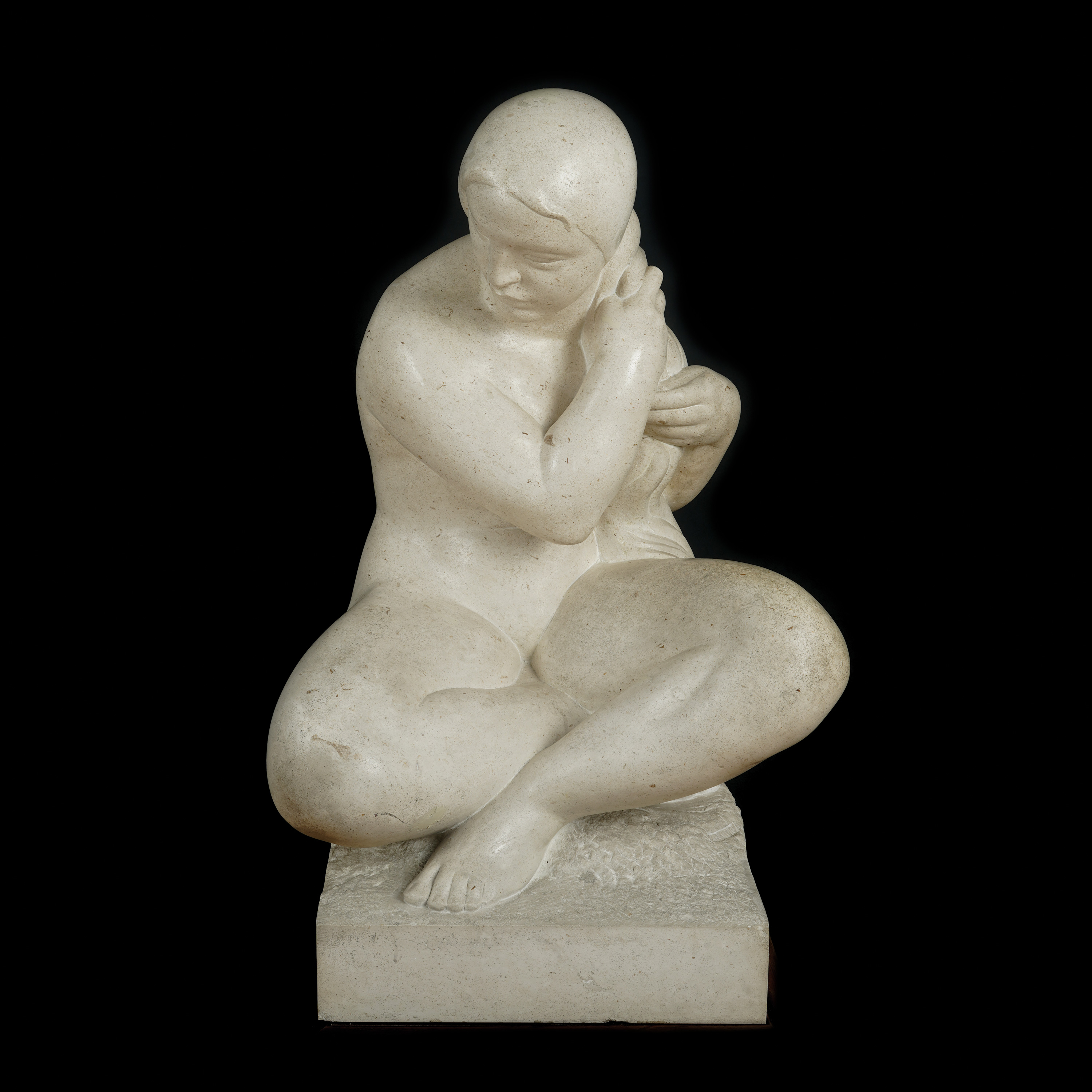
54. Girl Braiding Hair [1925.]
-
octavian-olariu octavian-olariu
lot.sold:
45.000,00 EUR
lot.estimate:
30.000,00 EUR -
50.000,00 EUR
lot.sold:
45.000,00 EUR
- signature
- signed lower right on the base, chiseled, ''KRŠINIĆ''
- medium
- stone
- description
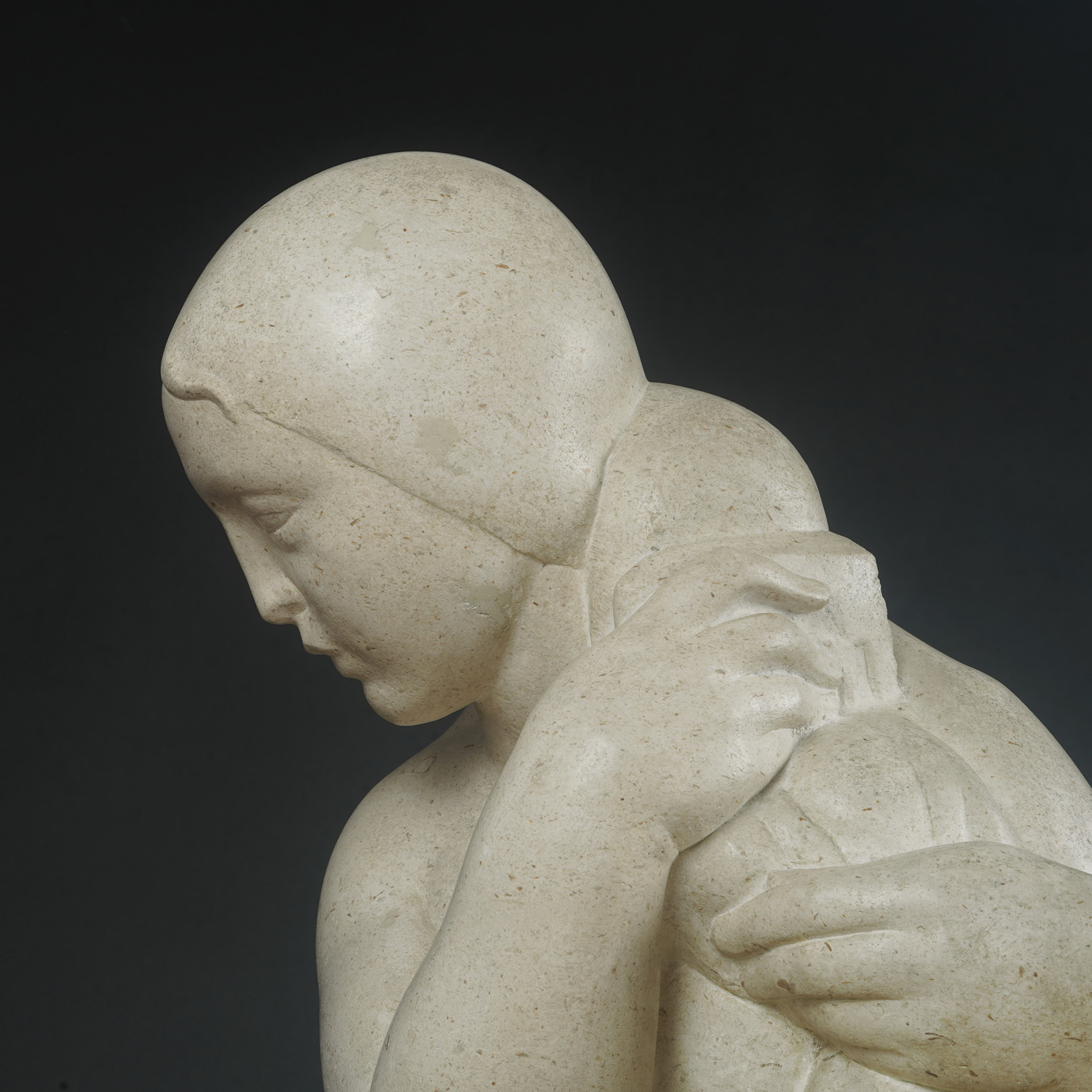
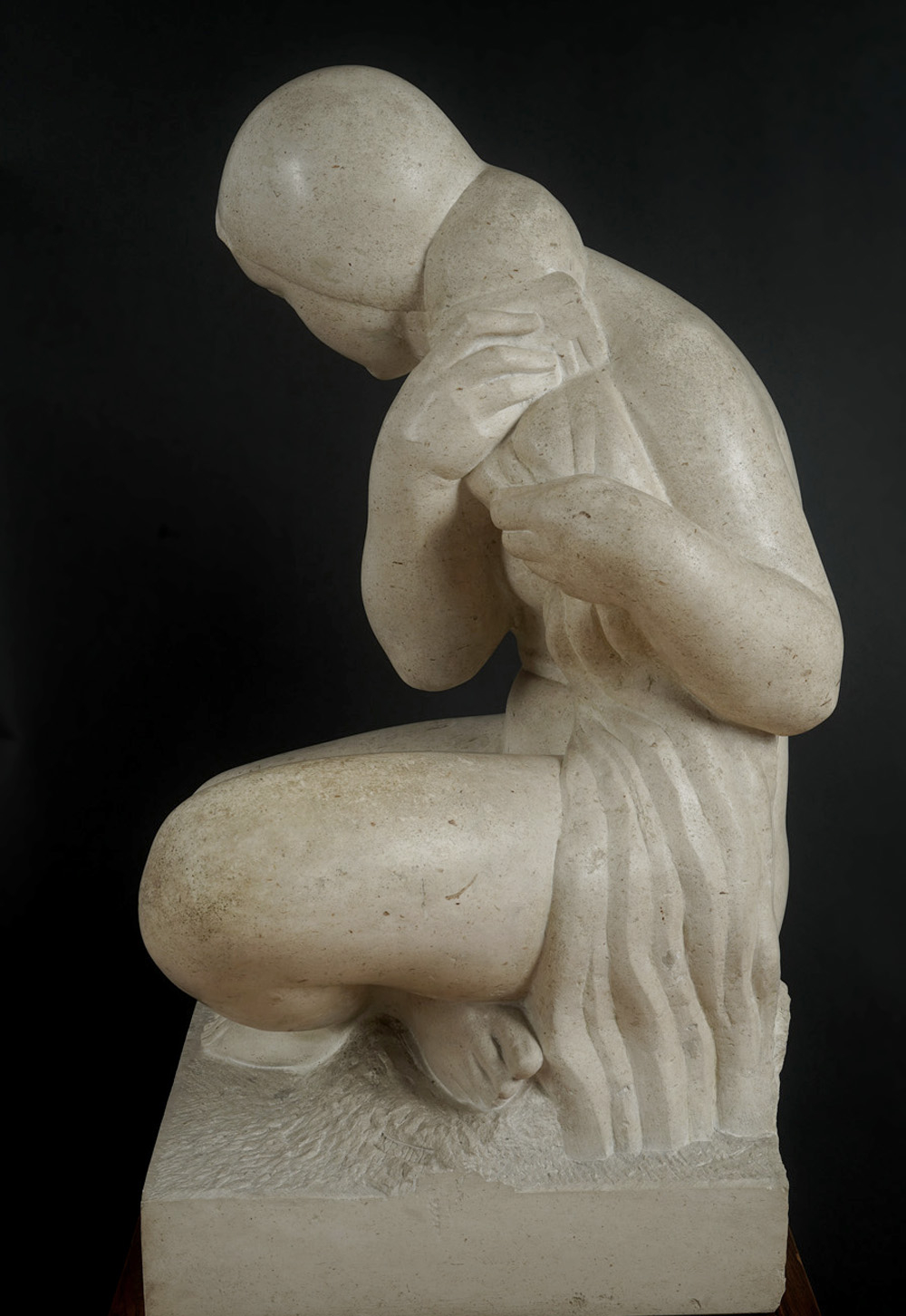
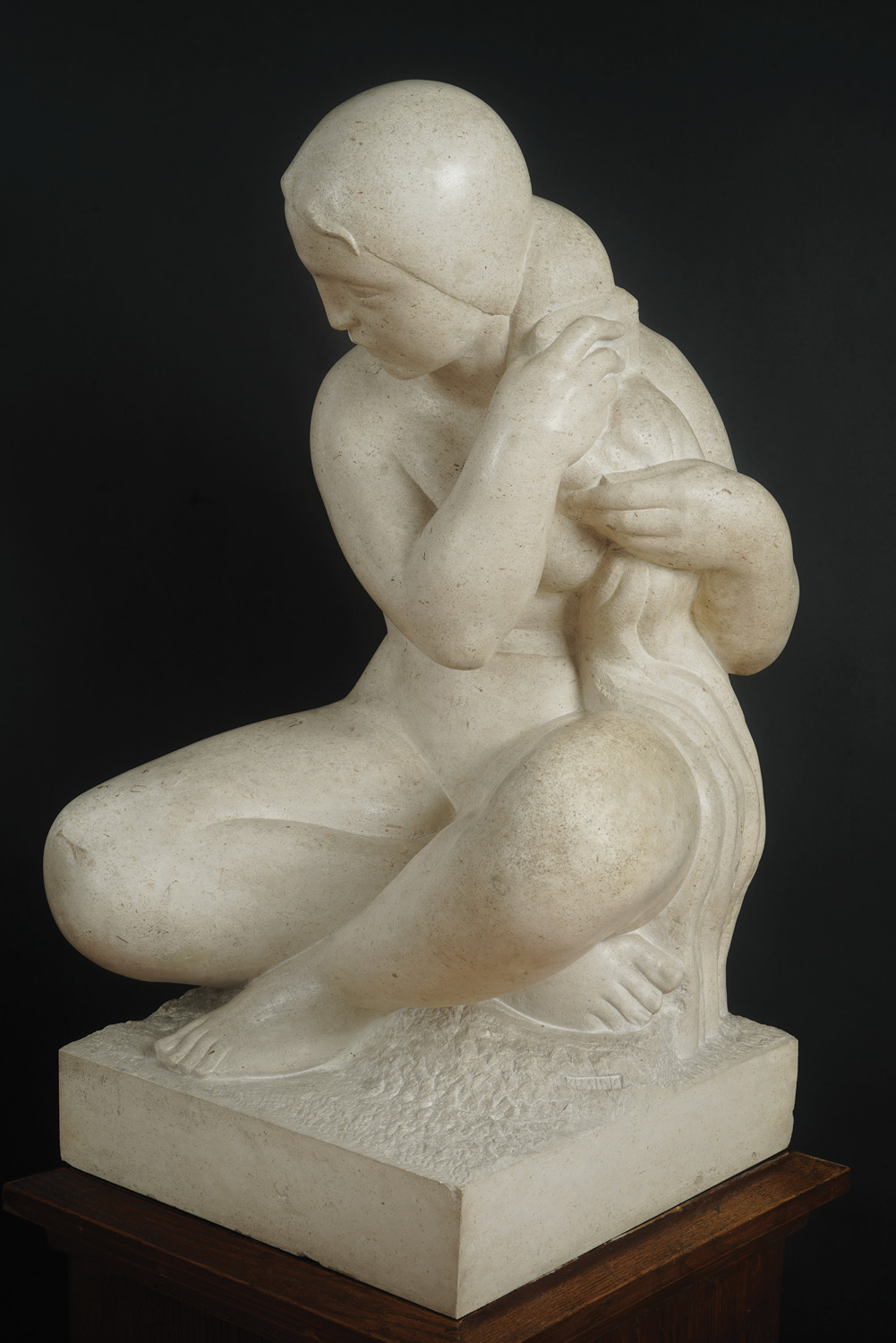
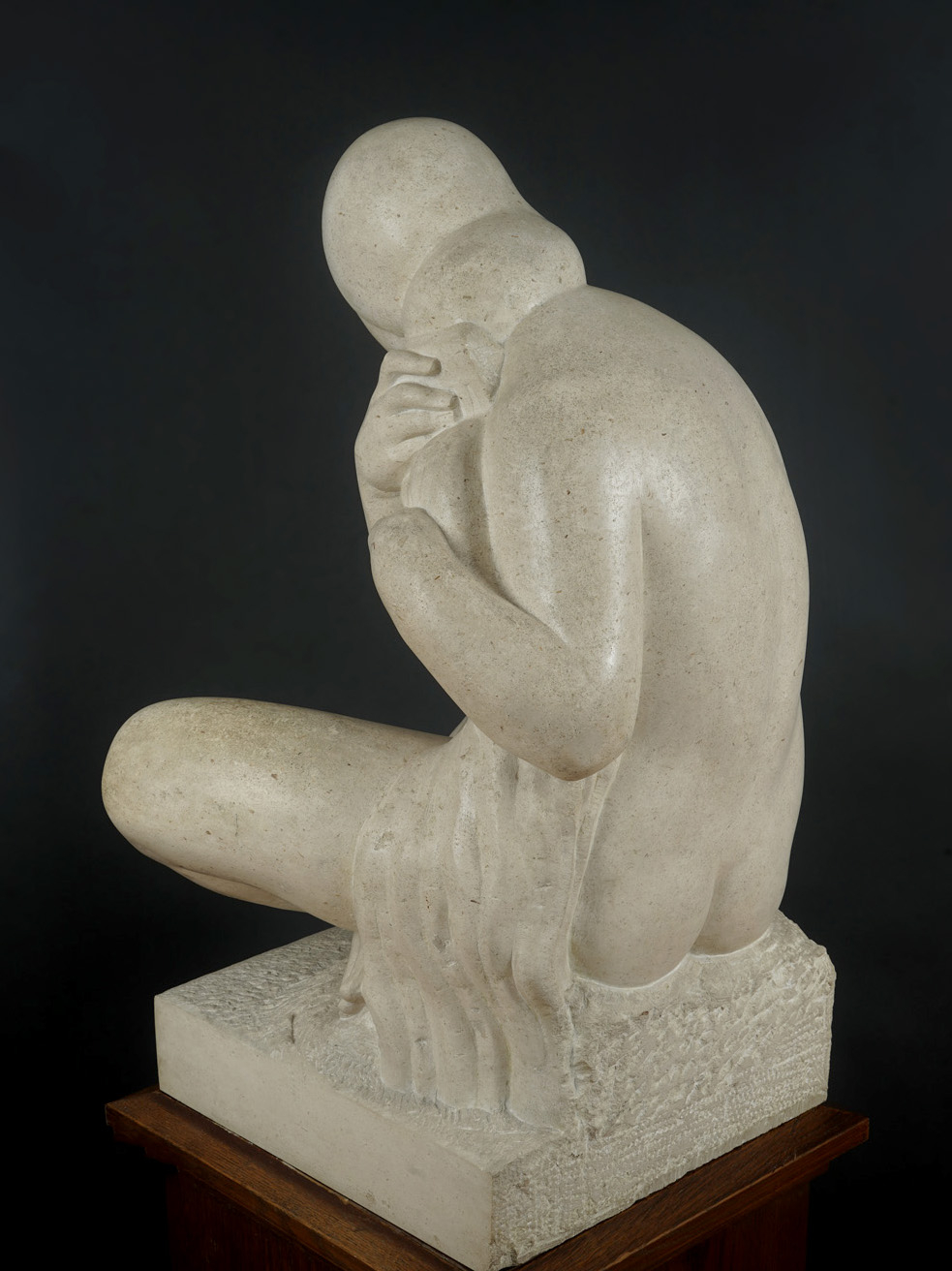
- Frano Kršinić (1897 - 1982) is one of the most significant Croatian sculptors of the 20th century, recognized by his subtle blend of classical tradition and modernist tendencies. He was born in Lubarda on the island of Korčula in 1897. He acquired his first sculpting skills by learning masonry from his father the stonemason and in the masonry department of the craft school (1909 - 1912). He continued his formal education in the Sculpture-Stone School in Hořice, which he finished in 1916, and then graduated from the Academy of Fine Arts in Prague in 1920. Kršinić perfected his knowledge on study trips to Germany (1920), Greece (1922), and France (1925). After operating as a freelance artist in Prague, Zagreb and Belgrade, he moved to Zagreb in 1924, where he was employed at the Academy of Fine Arts. From 1940 he was an associate, and from 1947 until his retirement in 1967 a full professor and the head of the Master's Workshop. He died in Zagreb in 1982. His oeuvre includes intimate female figures, public monuments, and monumental sculptures, and as a long-time professor at the Academy of Fine Arts in Zagreb, he influenced generations of young artists. He was a co-founder of the art group Zemlja, and his tendency towards a lyrical and refined approach to shaping the human figure particularly stands out. Here we are talking about the intimist aspect of Kršinić's work inspired by a lyrical experience. The sculpture "Girl Braiding Her Hair" by Frano Kršinić was made in stone in 1925. The work belongs to his early, but significant creative phase, when the sculptor had already shaped his recognizable style marked by a lyrical sensibility and the extraordinary sense of harmony and refinement of the female figure. The sculpture depicts a girl sitting and braiding her long hair with a comb. Exceptional attention is paid to the details, especially the beautifully carved hair that extends the entire length of the sculpture, and the carefully shaped comb which further emphasizes the virtuosity of the artist in working with stone. The artist's inspiration for intimist motifs, especially female figures, is clearly manifested in this work, which belongs to Kršinić's lyrical oeuvre, deeply rooted in his creativity. His dedication to the material and form is apparent in every detail, from the harmonious composition to the subtle modeling that gives the sculpture vibrancy and softness despite the coldness of the stone. The provenance of the sculpture further contributes to its significance. Originally it was owned by Baron Švegelj from Bled, a famous collector and lover of art, in whose castle Grimšica the sculpture was located until 1971. That year the sculpture was bought by a distinguished collector and lover of art from Ljubljana, who acquired it from the heiress of Baron Švegelj. Over time, collectors from this family have purchased several more Kršinić's works, including those they bought directly from the artist himself. Their collection testifies to their deep respect for Kršinić and his creativity and the continuity of valorization of Croatian and Yugoslav sculpture in the second half of the 20th century. Kršinić's work “Girl Braiding Her Hair“ manages to retain a degree of intimacy and emotional strength, infusing a realistic depiction with a poetic dimension. His hand, guided by experience and a deep connection with stone, managed to achieve a unique synthesis of form and expression, making this sculpture an indispensable piece in the history of Croatian sculpture in the 20th century.
- dimensions
-
- depth: 40 cm
- width: 48 cm
- height: 79 cm
- research_info
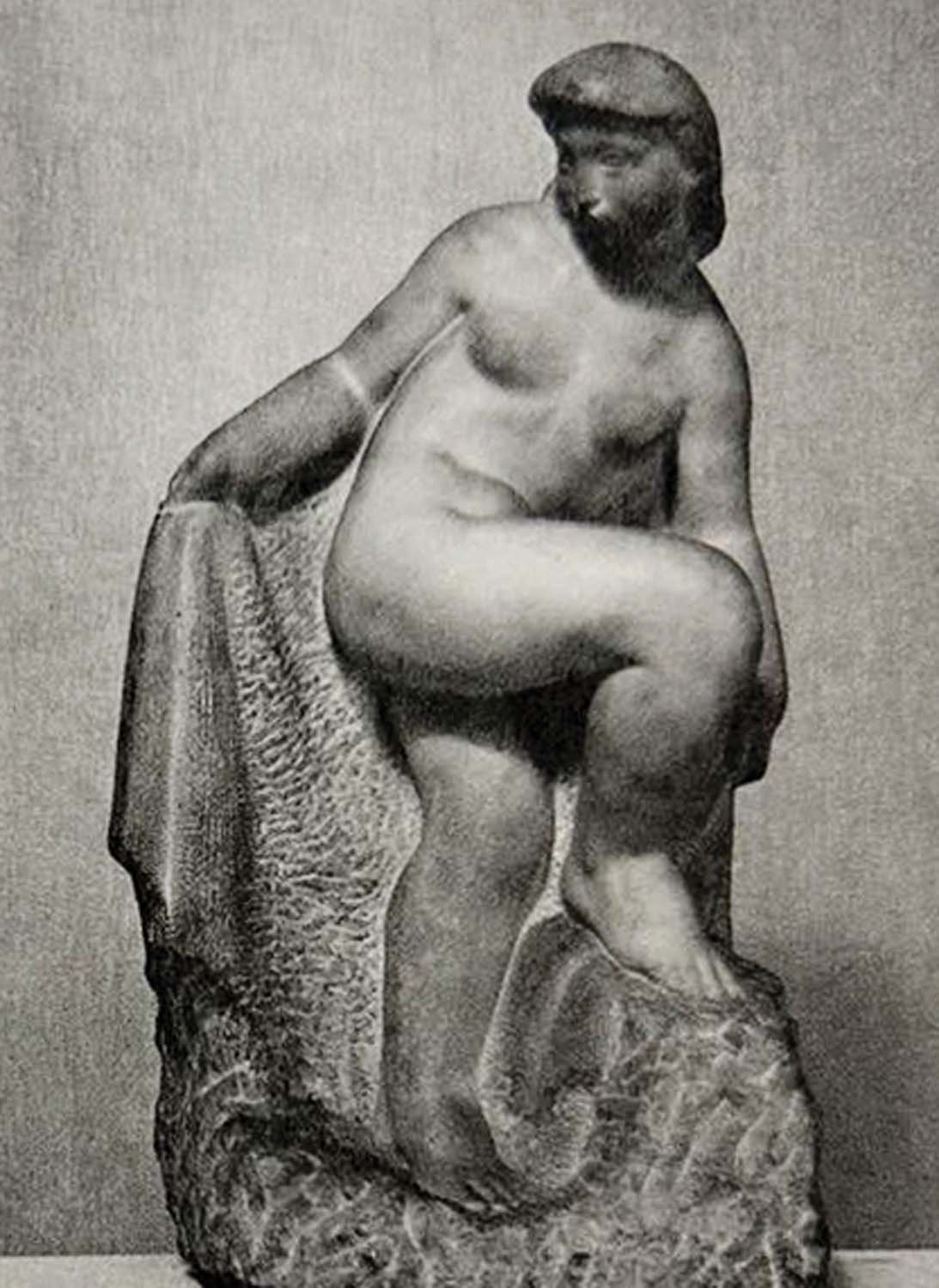
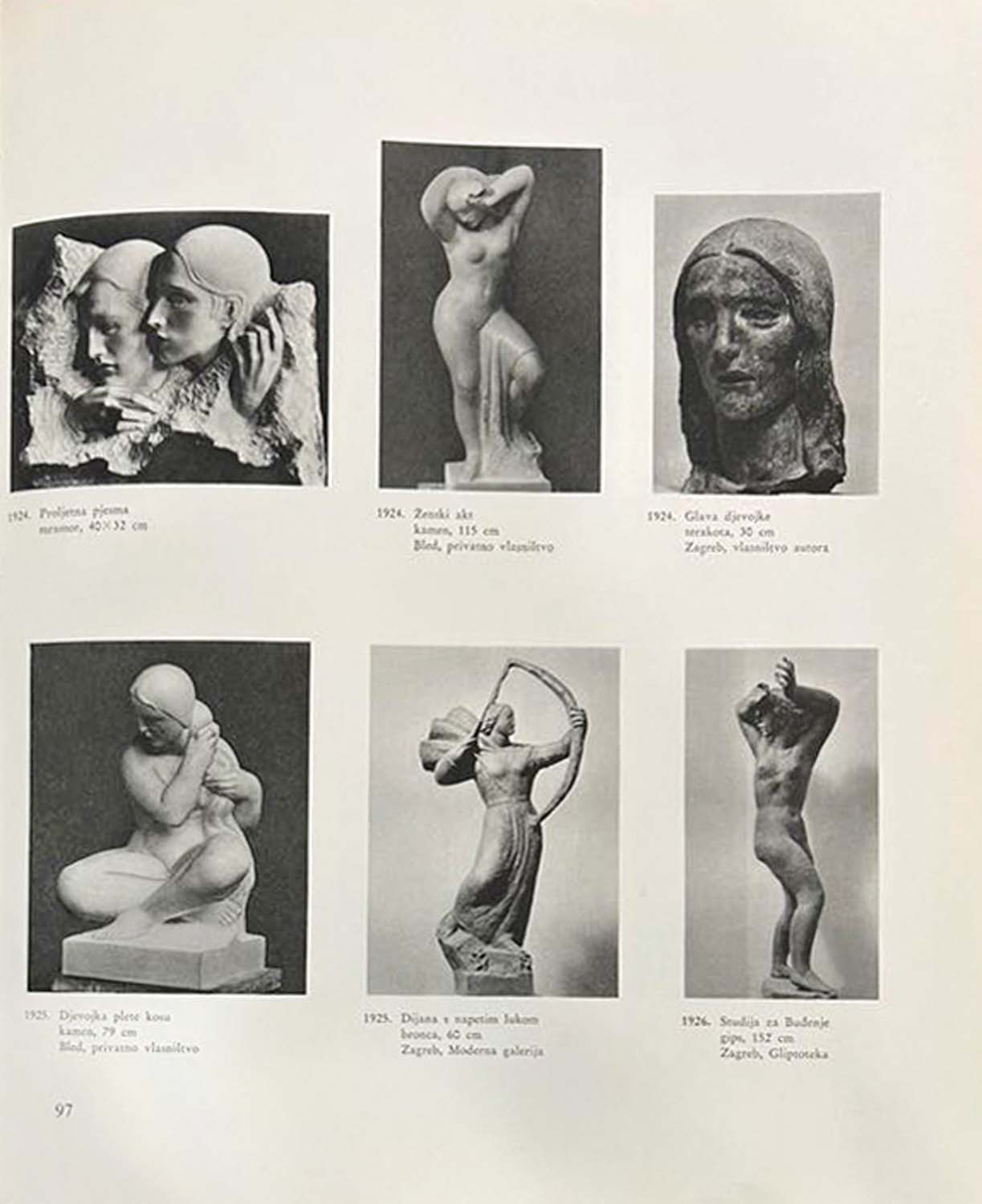
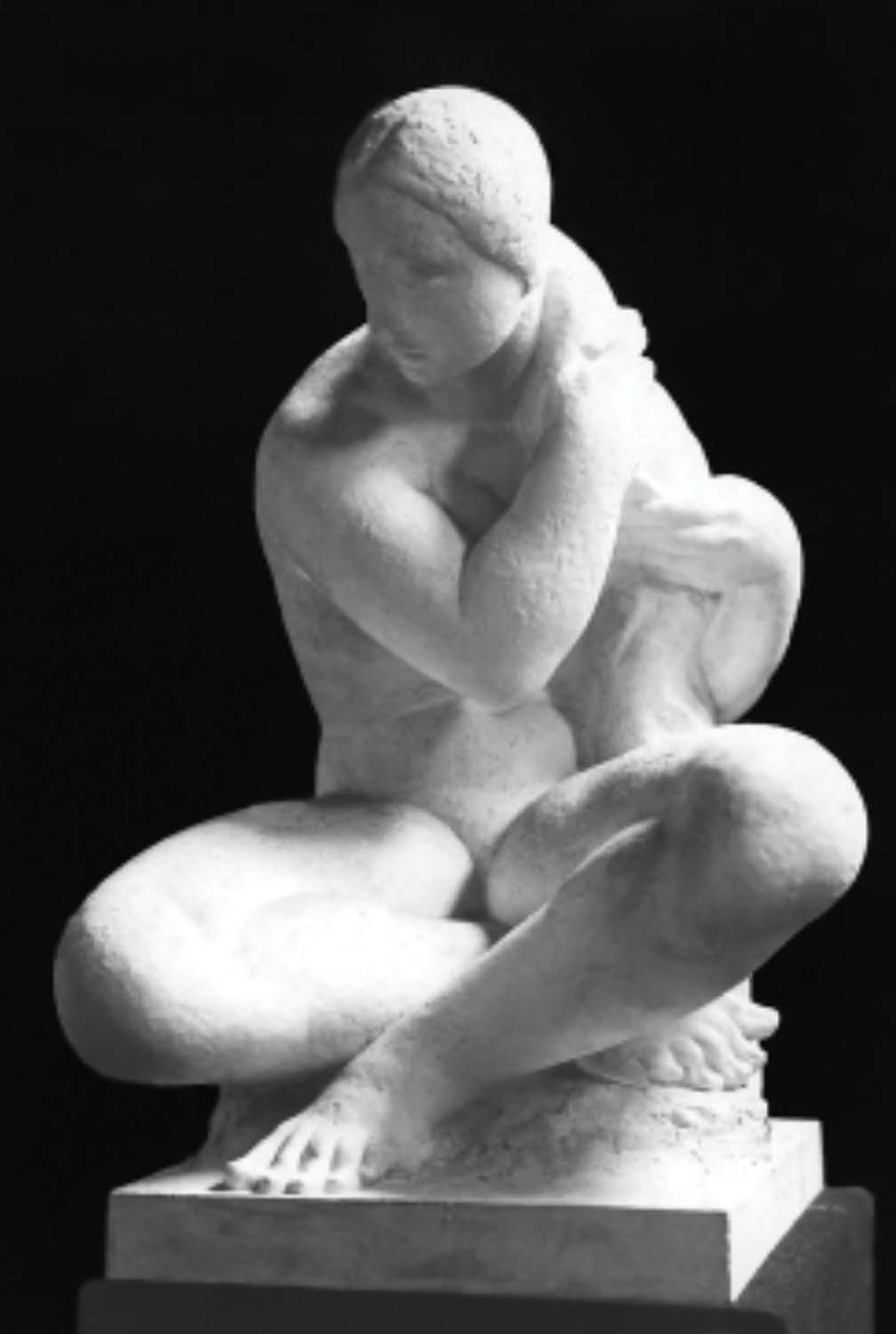
- The work is listed and reproduced in the monograph "Kršinić", Petar Šegedin, Grafički zavod Hrvatske, Zagreb, 1968, under the title "Girl Braids Her Hair" on page 97. The work has a version in plaster, dated to the period 1922-1924, under the title "Toilette". The plaster version was displayed at the exhibition of the Group of Independents in 1924, in the Salon Galić in Split, and is mentioned in the exhibition catalog under cat. no. 49.
- dating
- 1925.
- provenance
- from 1971, historical collection of the baron Švegel family in Bled; from 1971 to the present, private collection in Ljubljana. The new owners made contact with Frano Kršinić in 1971 and informed him about the ownership change.
INFORMAȚII SUPLIMENTARE
Fotografiile lotului sunt informative și orientative, neputând să asigure o vedere extrem de detaliată a obiectului din toate unghiurile. Recomandăm inspectarea fizică atentă a lotului înainte de licitare. Informații suplimentare în legătură cu starea de conservare, altele decât cele evident vizibile în fotografia/fotografiile lotului, disponibile pe calea formulării unei solicitări aici.
Pentru neclarități în legătură cu procedura de licitare, costurile adjudecării, termenii de garantare, de plată și de ridicare a lotului adjudecat recomandăm citirea/recitirea cu atenție a Regulamentului de Licitare.
Pentru informații suplimentare în legătură cu lotul și licitația contactați Departamentul de Consultanți de Artă.