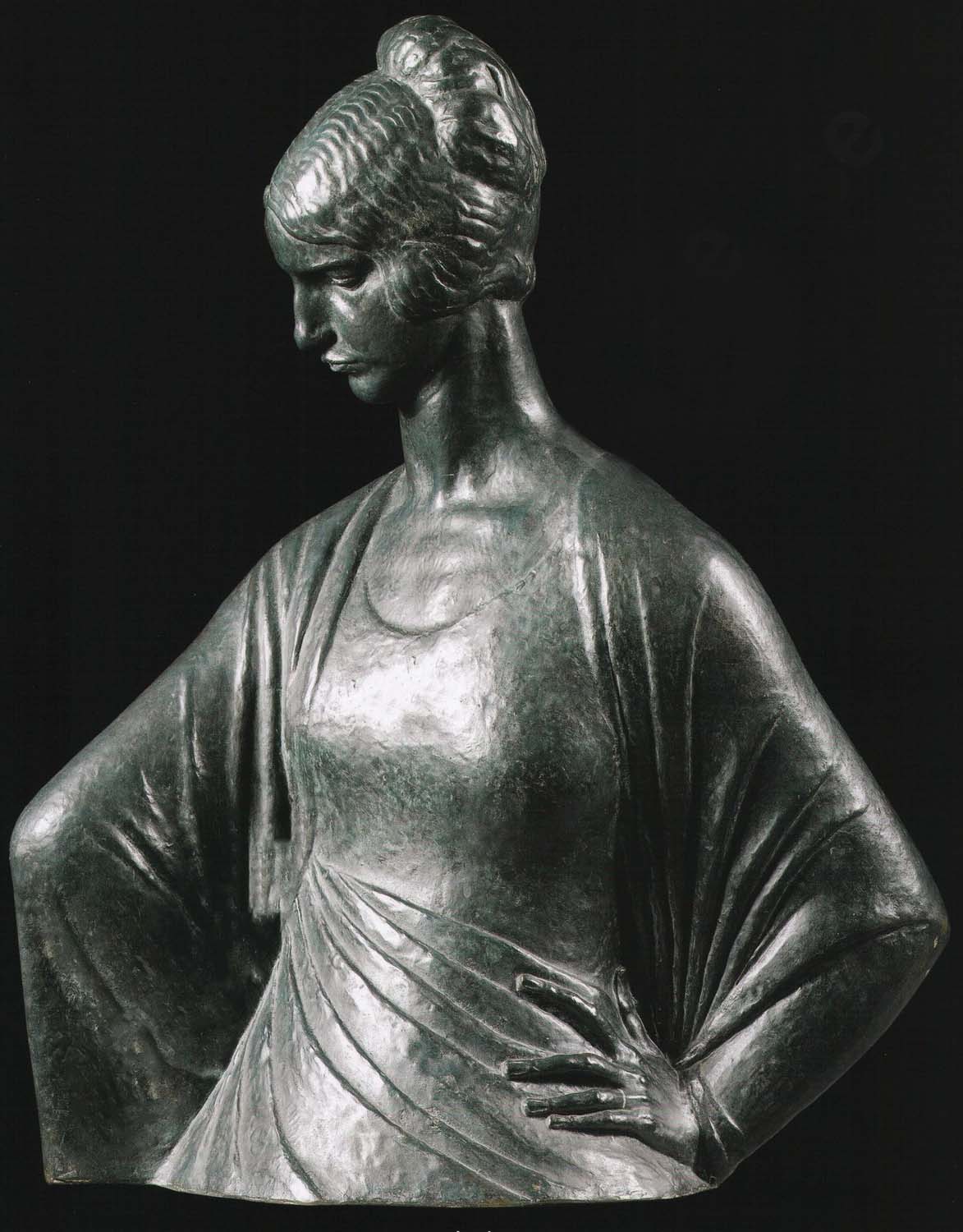
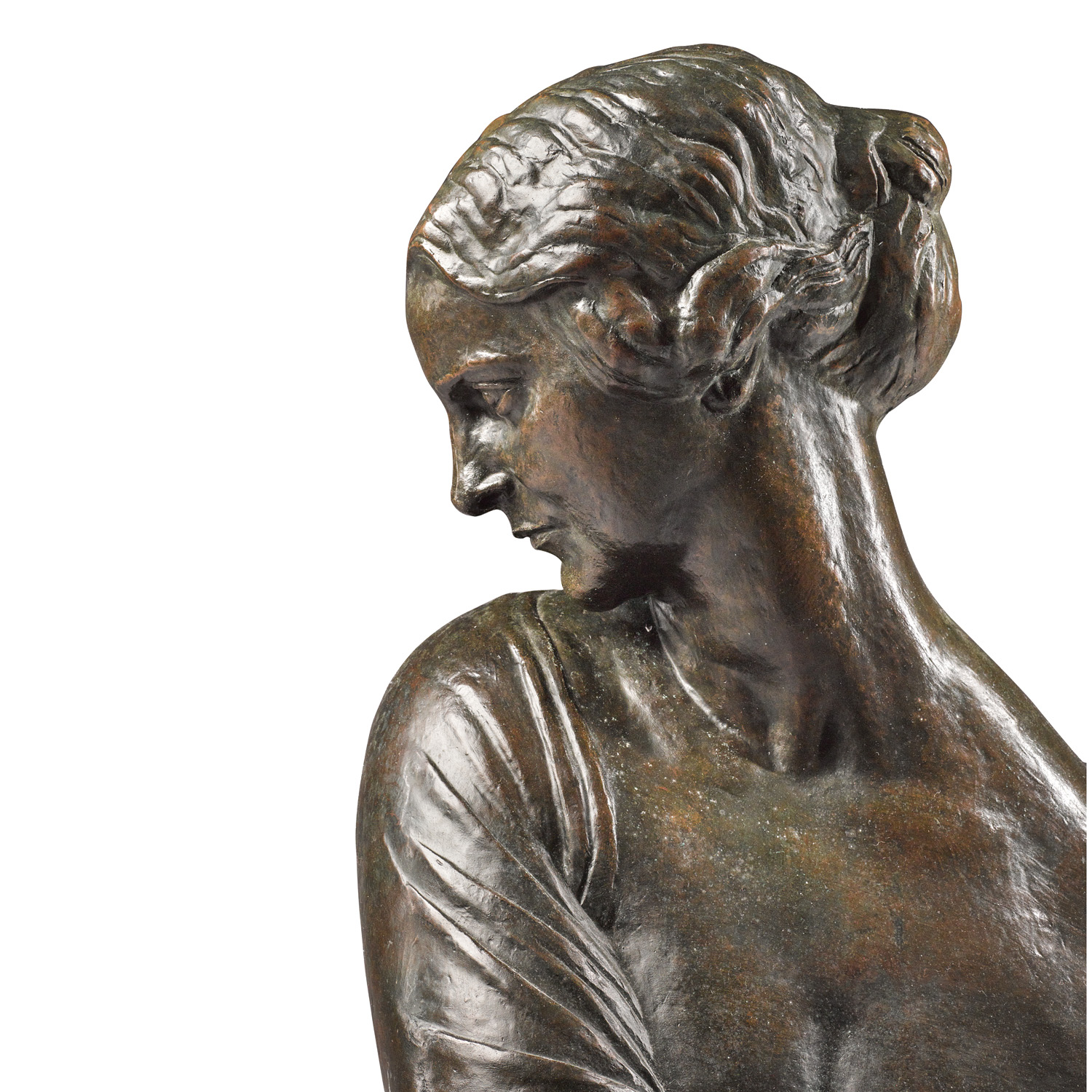
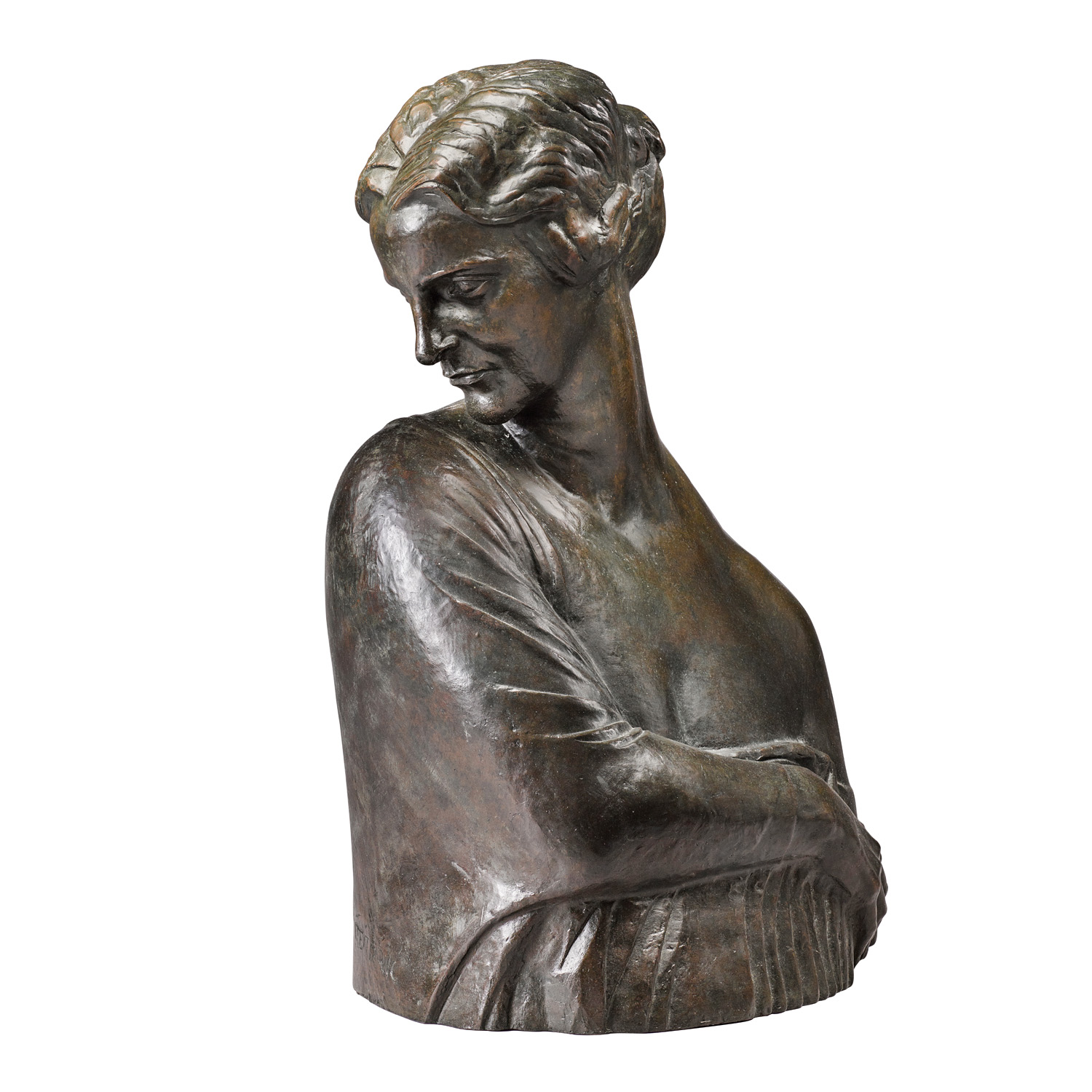
52. Muse (Milica Banac)
-
vladimirov-javacheff-christo vladimirov-javacheff-christo
lot.sold:
42.500,00 EUR
lot.estimate:
25.000,00 EUR -
35.000,00 EUR
lot.sold:
42.500,00 EUR
- signature
- signed at the base, "MEŠTROVIĆ"
- medium
- bronze
- description
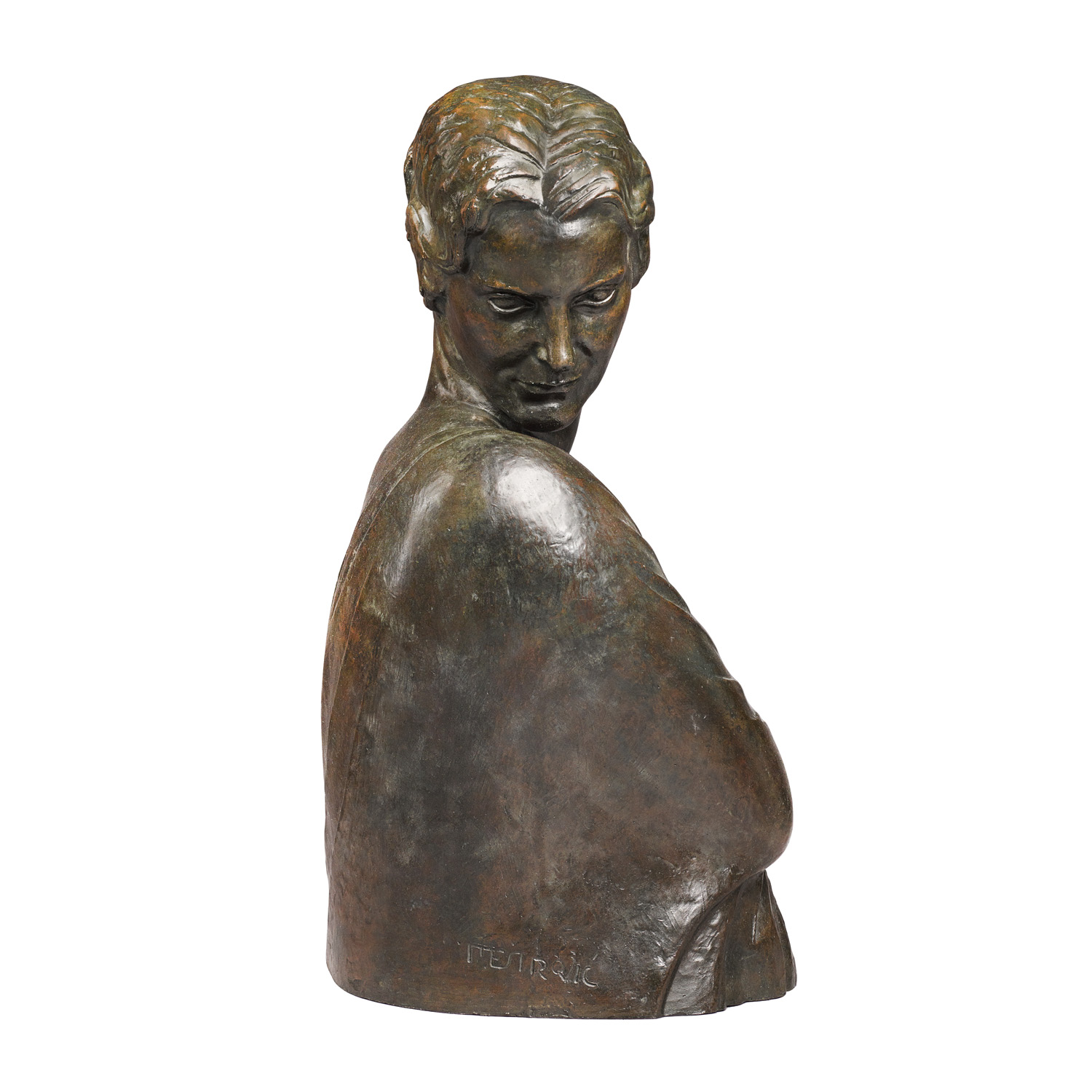
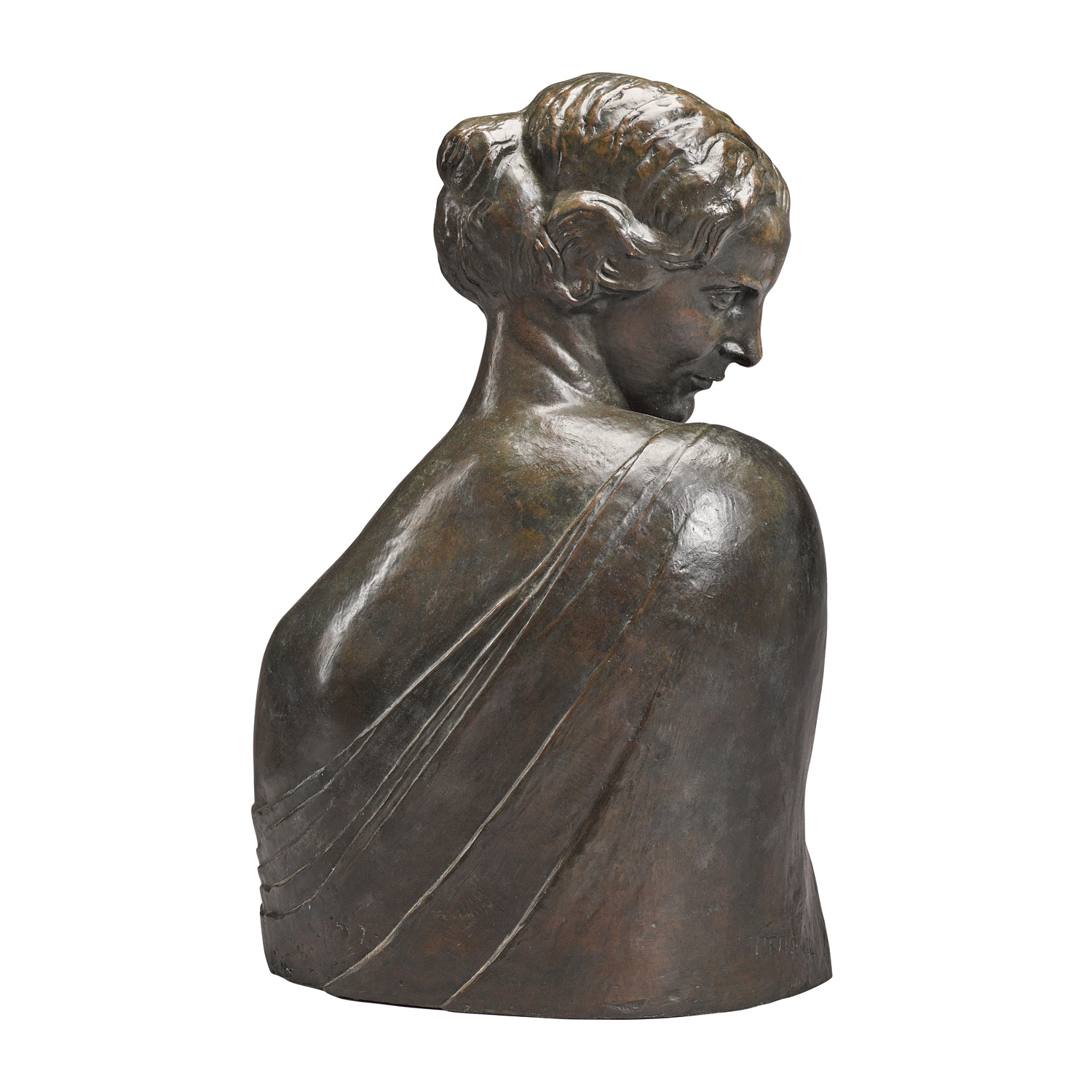
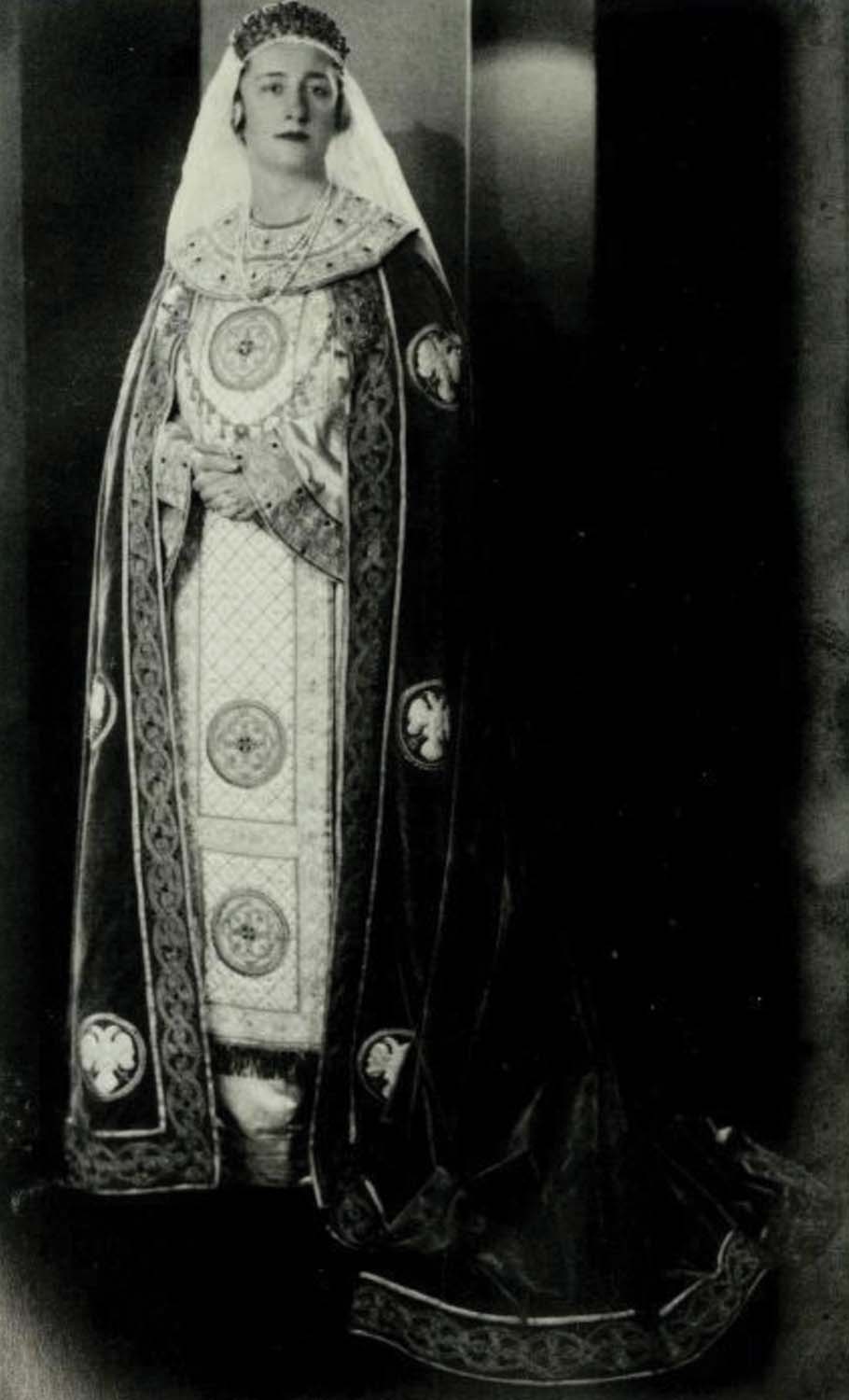
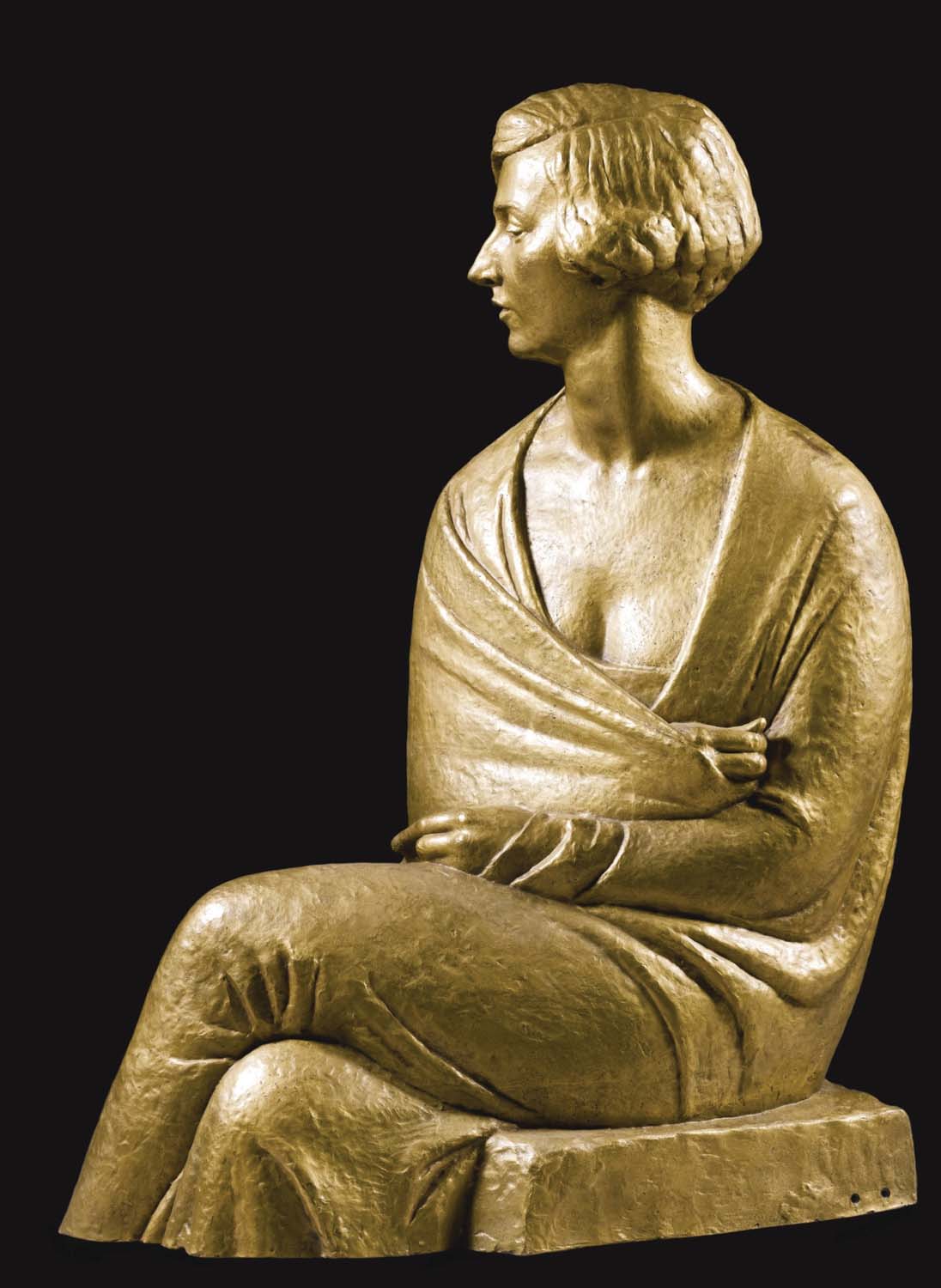
- One of the giants of Croatian sculpture, Ivan Meštrović, was born in a small Slavonian village Vrpolje in 1883. He began his first works as a child, carving wood and stone while herding sheep on the slopes of Svilaja. Few could predict that from such humble beginnings would emerge one of the pivotal figures of art in these areas, whose artistic work would define the development of modern sculpture in Croatia and the world. Thanks to a financial support of the citizens of Drniš, the young and talented Meštrović was educated in 1900 in the stone carving workshop of Pavle Bilinić in Split, and later continued his education at the Academy of Fine Arts in Vienna. In this city, he met Auguste Rodin, who left a strong impression on Meštrović's early artistic expression. After graduation, he enrolled in the study of architecture at the Vienna Academy, and began to exhibit actively as a member of the Secession Group. Among other things, he was the initiator and ideologist of the visual artists' society Medulić, and actively participated in cultural and political life. Due to his political beliefs, he was arrested and eventually forced to leave his home country. During World War II, he immigrated first to Italy, then to Switzerland, and finally settled in America in 1947, where he died in 1962. During his long and productive career, he completed a significant number of works, mostly in stone and bronze. His artistic expression was inspired by ancient and Renaissance sculptors, especially Michelangelo, and French contemporaries Auguste Rodin, Antoine Bourdelle and Aristide Maillol. He approached both private commissions and public sculptures with the same vigor, and his most famous works include ''The Well of Life" (1905), ''Marko Marulić" (1925), ''Gregory of Nin" (1929), ''History of the Croats" (1932), and "Indians" (1928) in Chicago. In public sculptures, Ivan Meštrović proved himself to be an exceptional portraitist, a talent further confirmed by privately executed portrait sculptures. Thus, he created portrait busts of contemporaries, mostly his friends, acquaintances, and devotees, among which also was the bust of Milica Banac, cast in bronze around 1912. Born in Osijek in 1888 in the Popović family, Milica was known from early childhood for her demeanor, which, according to her son, Vane Ivanović, resembled that of a Byzantine queen and always made a strong impression on her interlocutors. She was a woman of sharp intellect, irresistible humor, and remarkable beauty, which consequently brought her numerous suitors, even after she became the wife of wealthy and influential magnate and shipowner Božo Banac. Like her husband Božo, and Ivan Meštrović himself, Milica was politically active and fervently supported the idea of Yugoslav unification. It is possible that Milica met Meštrović in Zagreb's social circles in the 1910s, and that their similar worldviews brought them closer and contributed to the creation of a warm friendship that is recorded in extensive written correspondence. In the letters preserved in the archives of the University of Notre Dame, Milica discusses with Ivan Meštrović and his wife Olga about travels as well as children and grandchildren, and at the end of each letter, she expresses her admiration for the artist. Her free spirit was mirrored in her fashion expression, and during her life, she became recognizable by her short bob hairstyle and long, no-button coats of simple cuts, which she preferred to be tailored by her Yugoslav tailor in the London branch of the fashion house Jeanne Paquin. Between 1925 and 1930, she resided in London with her husband, where she maintained and nurtured good relations with members of the highest circles of English society, among others, with the royal family. After leaving London, she continued to host members of the elite, such as the Duke and Duchess of Kent, the Prince of Greece, and Prince Rainier of Monaco, in her homes in Dalmatia, New York, and Monaco. Little is known fact that Banac's villa in Cavtat, whose loggia is also adorned with Ivan Meštrović's reliefs, served as a summer refuge for the adulterous Windsor-Simpson couple, who often visited the Dalmatian coast, as well as for the Duke and Duchess of Kent. Thus, Milica Banac, often despite her sharp tongue and immutable attitudes, played an important role in the social life of the first half of the 20th century. She remained true to herself until her death in Monaco in 1970. Meštrović, a sculptor of strong and closed forms, records in this bronze bust the appearance of the then 24-year-old Milica Banac, before she adopted her characteristic fashion style. The spirit of Art Nouveau is very much present here, and is primarily noticeable in the stylized posture that Milica assumes, and in the way her long and wavy hair is gently collected into a bun. Only on closer examination do we discover in the face of Milica the characteristic Meštrović expression, which gives almost all of his subjects a strong and unwavering spirit. In the case of Milica Banac, this aura is fully justified, and her strong character and relentless spirit are perfectly immortalized in the layers of bronze. Seemingly somewhat contradictory, her elongated fingers shyly hold the drapery of the dress that has slipped off her shoulder, revealing to the observer the subtle beauty of the female body. However, there is not a trace of lasciviousness in this playing with the motif of nudity, only the skill of the sculptor who - by connecting the line of the elongated neck with that of the lowered and naked shoulder - creates a strong compositional diagonal. We find numerous parallels, both in the physiognomy of depicted characters and in the way they are modeled, in the study for the sculpture of Maria Banac and in the two sculptures of Ruža Meštrović, created in 1915. Elongated necks and lowered shoulders, as well as strong models of faces, hair, and draperies in the aforementioned sculptures, transformed these extraordinary women into symbols - not only of female beauty but also of inner strength. However, a particularly interesting comparison is the bust of Milica Banac from 1912 with her relief depiction from 1925, which was sold in 2014 through Sotheby's auction house in London. The relief, depicting Milica Banac in profile, was made in gilded bronze, and the family story claims that Meštrović himself melted three gold coins for the execution of the gilding. Already with the recognizable short bob, Milica again holds the drapery of the cloak around herself with her hands, this time demonstrating restraint that is not noticeable in her earlier bust. The youthful sensuality is replaced here by mature grace, and in the posture of the portrayed Milica, we recognize the same spirit and sublime demeanor of the Byzantine queen for which she was and remained famous.
- research_info
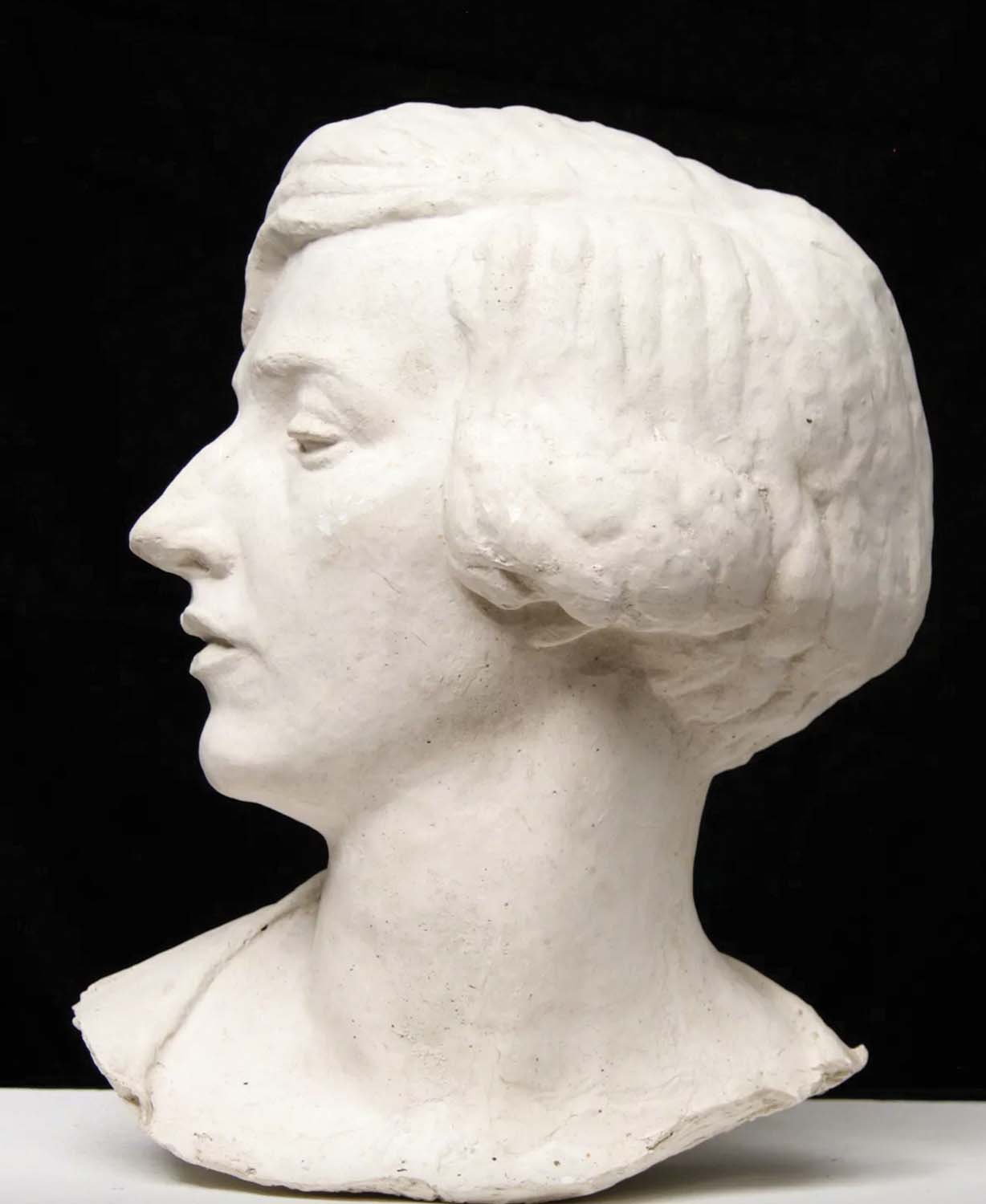
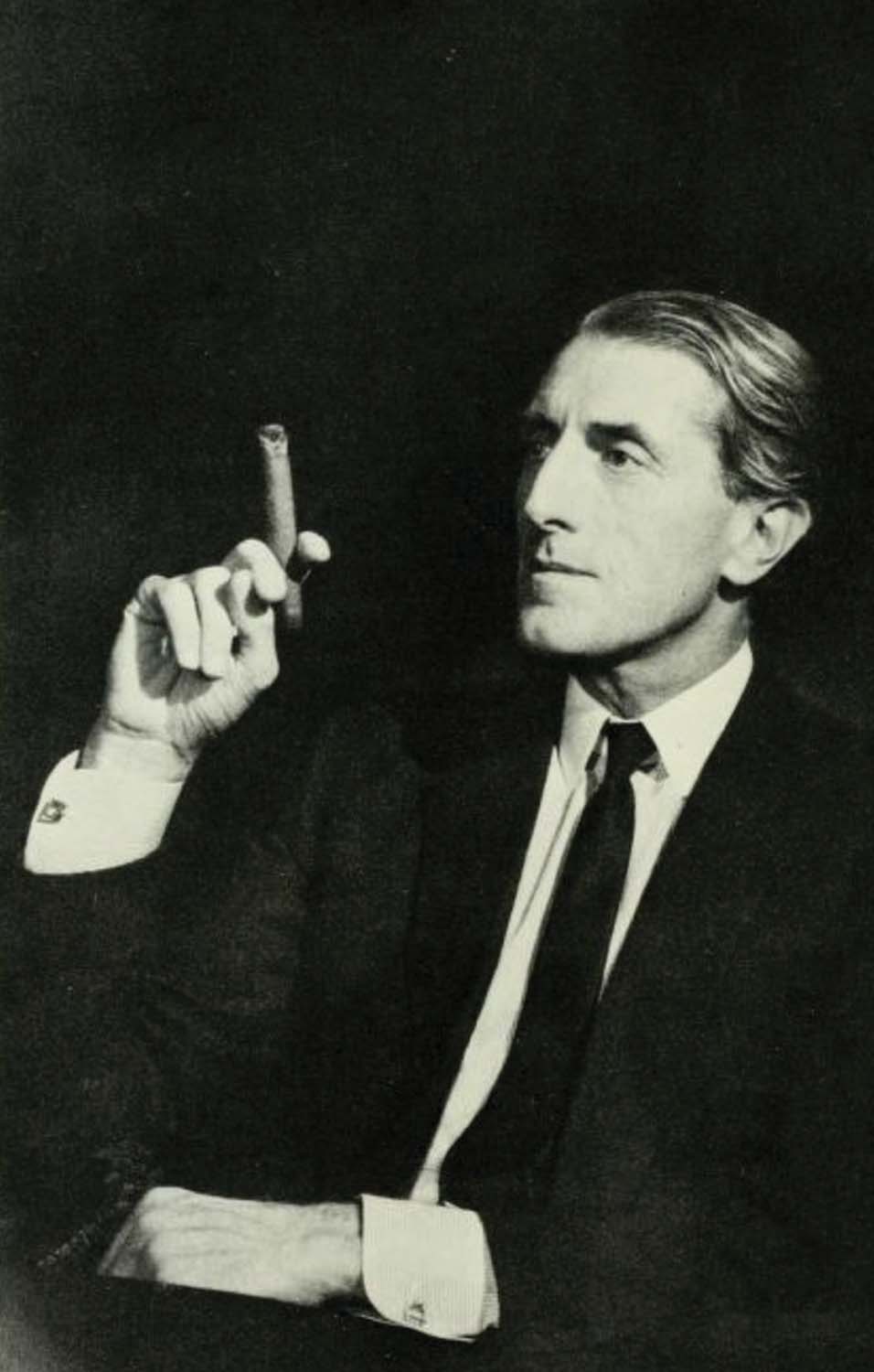
- The offered bronze is one of three known bust variants that Ivan Meštrović designed and dedicated to Milica Banac, whom we can consider a true muse of the artist. A small white plaster head of Milica (40x20x30 cm) is in the Dubrovnik Museum of Contemporary Art. The third version, a bronze sculpture, 3/4 figure (113 x 81 cm), which belonged to Milica Banac and her successors, was sold at Sotheby's auction in May 2014. The bronze is inventoried/mentioned (probably to some extent inaccurately) in Meštrović's documents from the archives of the University of Notre Dame, GMST box 10/22, under the "Portrait, unknown woman, bronze, 1912", inventory of Vane Ivanović's collection, Formentor, Mallorca. Milica Banac (1888-1970, born Popović, first marriage Ivanović) was an extraordinary personality of the first half of the 20th century in high European societies, living between Zagreb, Dubrovnik, Paris, London, and Monte Carlo. Second wife of shipping magnate Božo Banac (1883-1945), Milica was a woman of her time, her behavior, elegance, and high intelligence made her exceptional company. Most likely she met Meštrović early, during her first stay in Croatia after 1910. Milica and her second husband, Božo Banac, were close friends with the sculptor, which is easily confirmed by their correspondence, Banac's Meštrović collection, and the artwork dedicated to Milica. Vane Ivanović, the oldest son of Milica from her first marriage, was an extraordinary historical figure, a man of his time, who fully used his origin and education to become a key figure of the 20th century. A "dandy" in appearance, a Croat by descent, but by upbringing and education a true Englishman, he was educated at the Westminster school and the University of Cambridge. He was a shipowner, political activist, diplomat, and writer, but above all a passionate collector and art lover. Without a passport for most of his life, he became a Croatian citizen only in 1990 and died in London in 1999.
- provenance
- made for Milica Banac (1888 - 1970); from then on, family heritage to Vana Ivanovic, Dubrovnik, until 1969; exported to Formentor, Mallorca then in London.
INFORMAȚII SUPLIMENTARE
Fotografiile lotului sunt informative și orientative, neputând să asigure o vedere extrem de detaliată a obiectului din toate unghiurile. Recomandăm inspectarea fizică atentă a lotului înainte de licitare. Informații suplimentare în legătură cu starea de conservare, altele decât cele evident vizibile în fotografia/fotografiile lotului, disponibile pe calea formulării unei solicitări aici.
Pentru neclarități în legătură cu procedura de licitare, costurile adjudecării, termenii de garantare, de plată și de ridicare a lotului adjudecat recomandăm citirea/recitirea cu atenție a Regulamentului de Licitare.
Pentru informații suplimentare în legătură cu lotul și licitația contactați Departamentul de Consultanți de Artă.