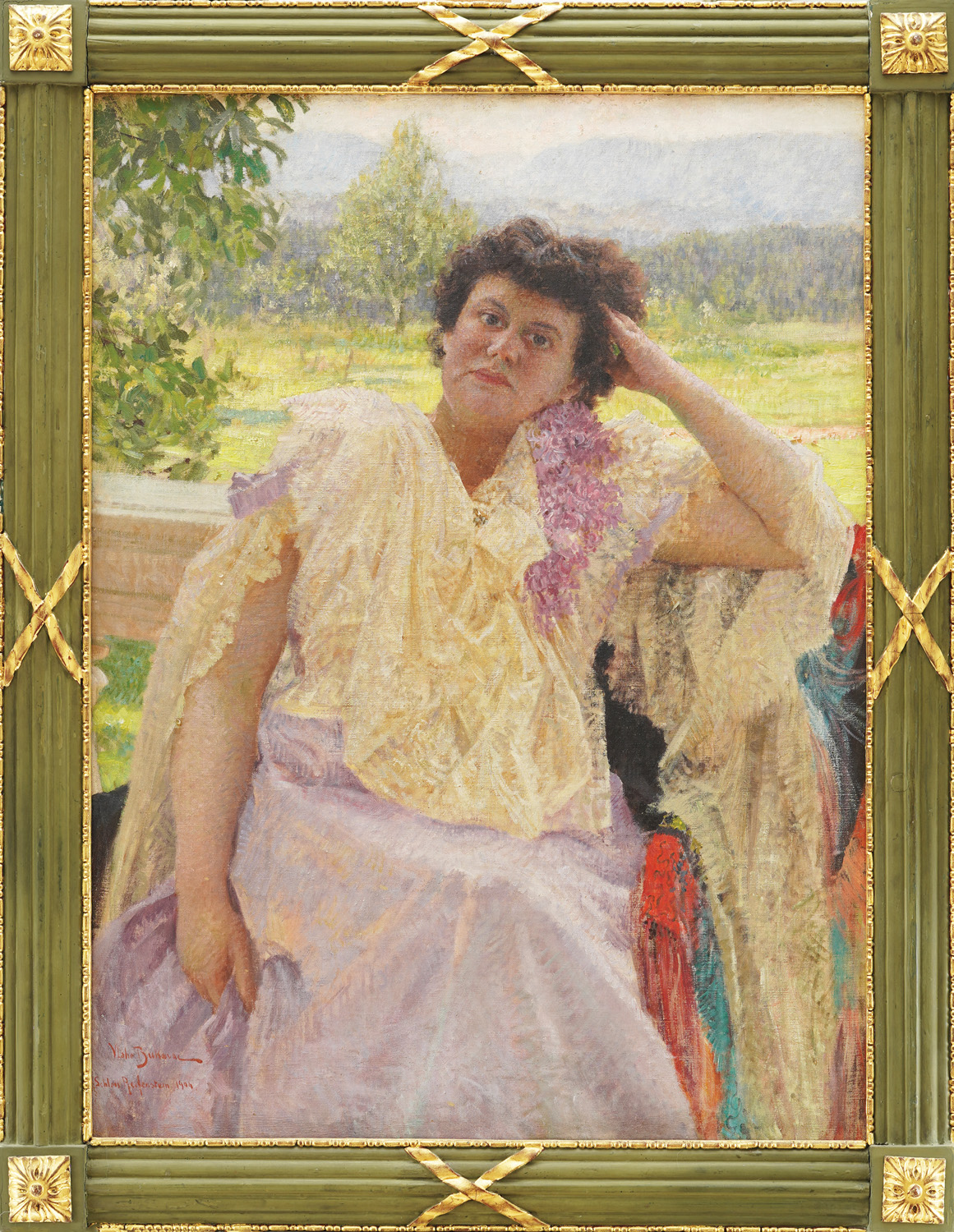
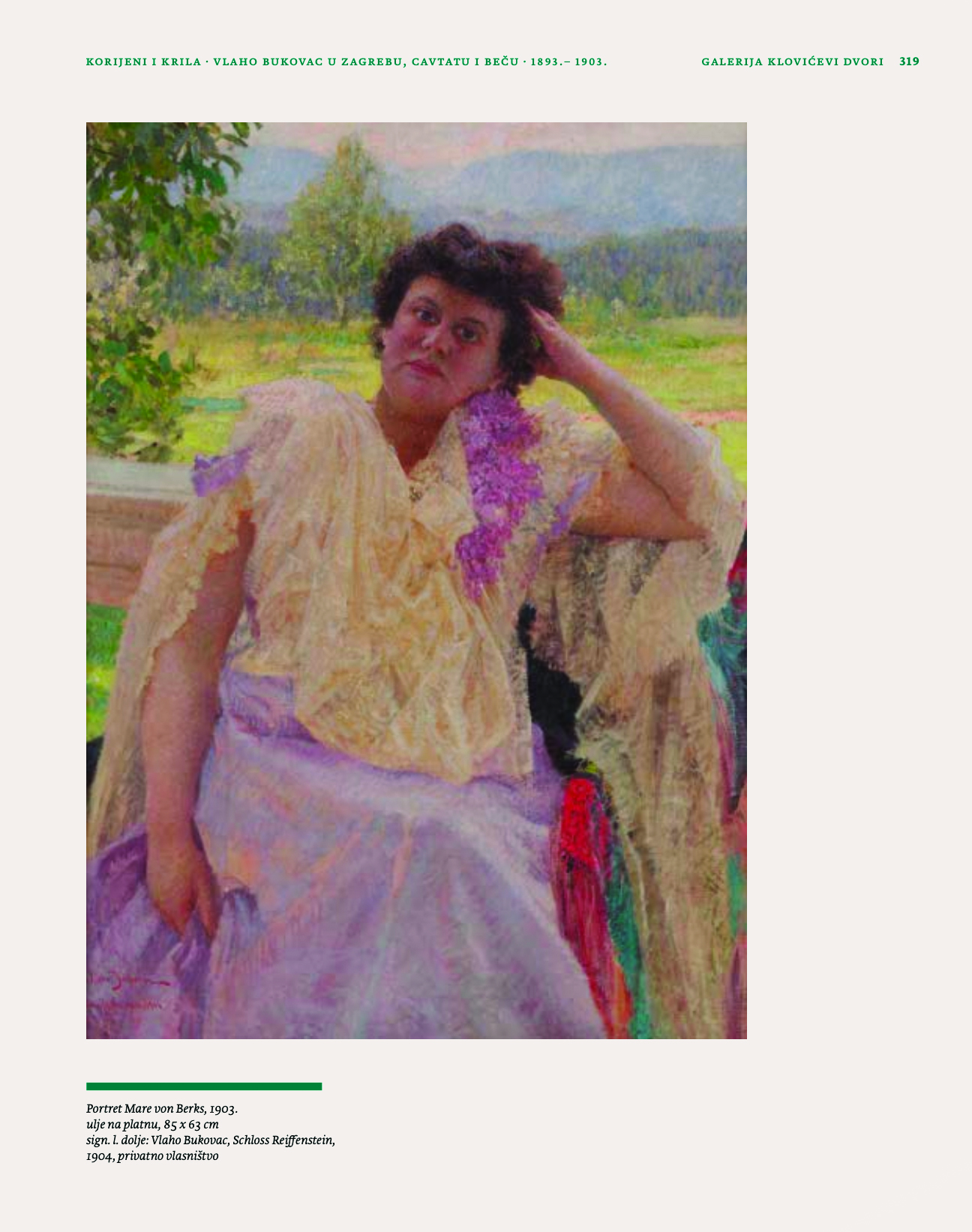
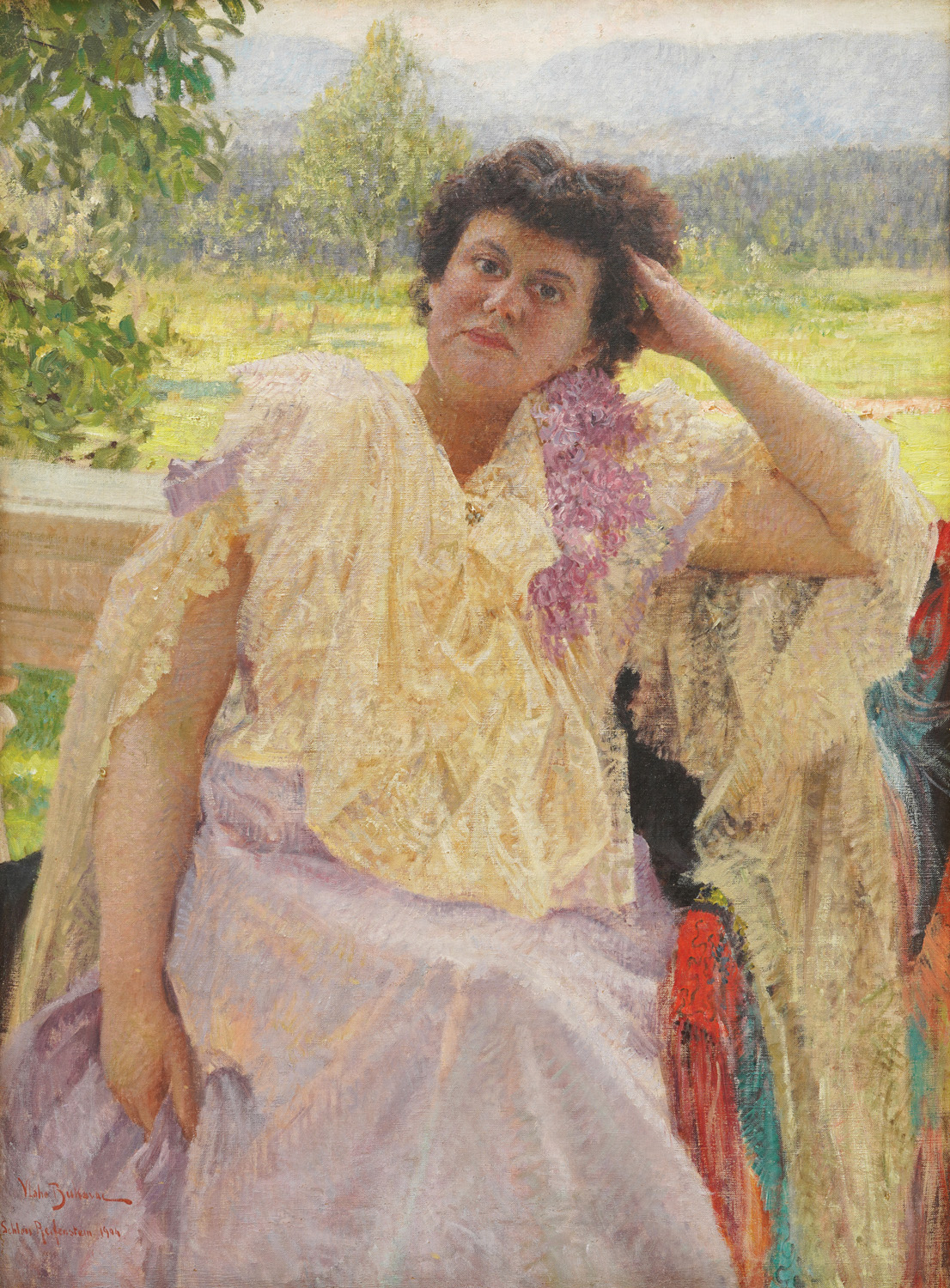
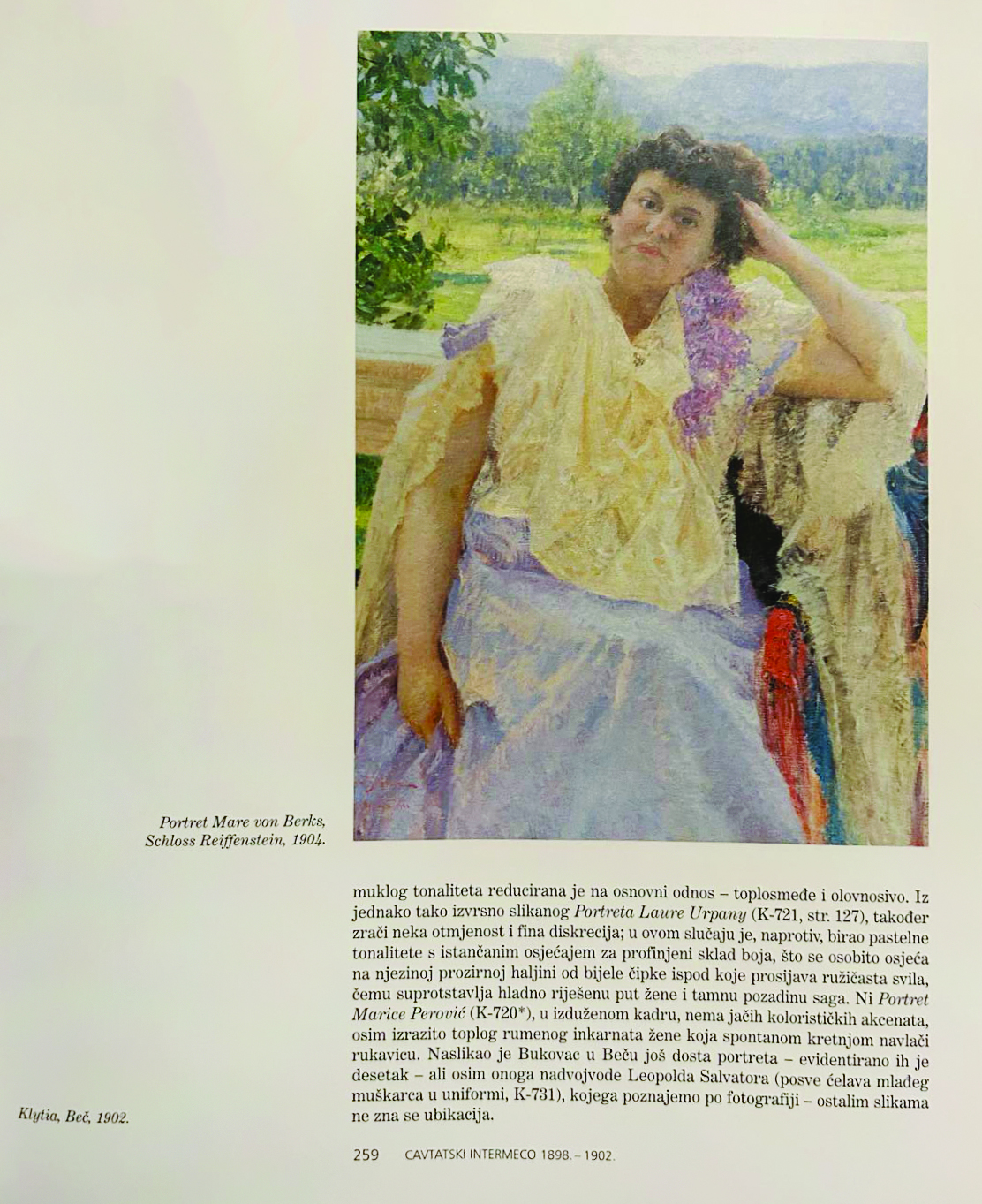
98. Portrait of Mare von Berks [1904.]
-
octavian-olariu octavian-olariu
lot.estimate:
45.000,00 EUR
lot.estimate:
45.000,00 EUR -
65.000,00 EUR
lot.not_sold:
- signature
- signed, located and dated lower left, in red, "Vlaho Bukovac Schloss Reifenstein 1904."
- medium
- oil on canvas
- description
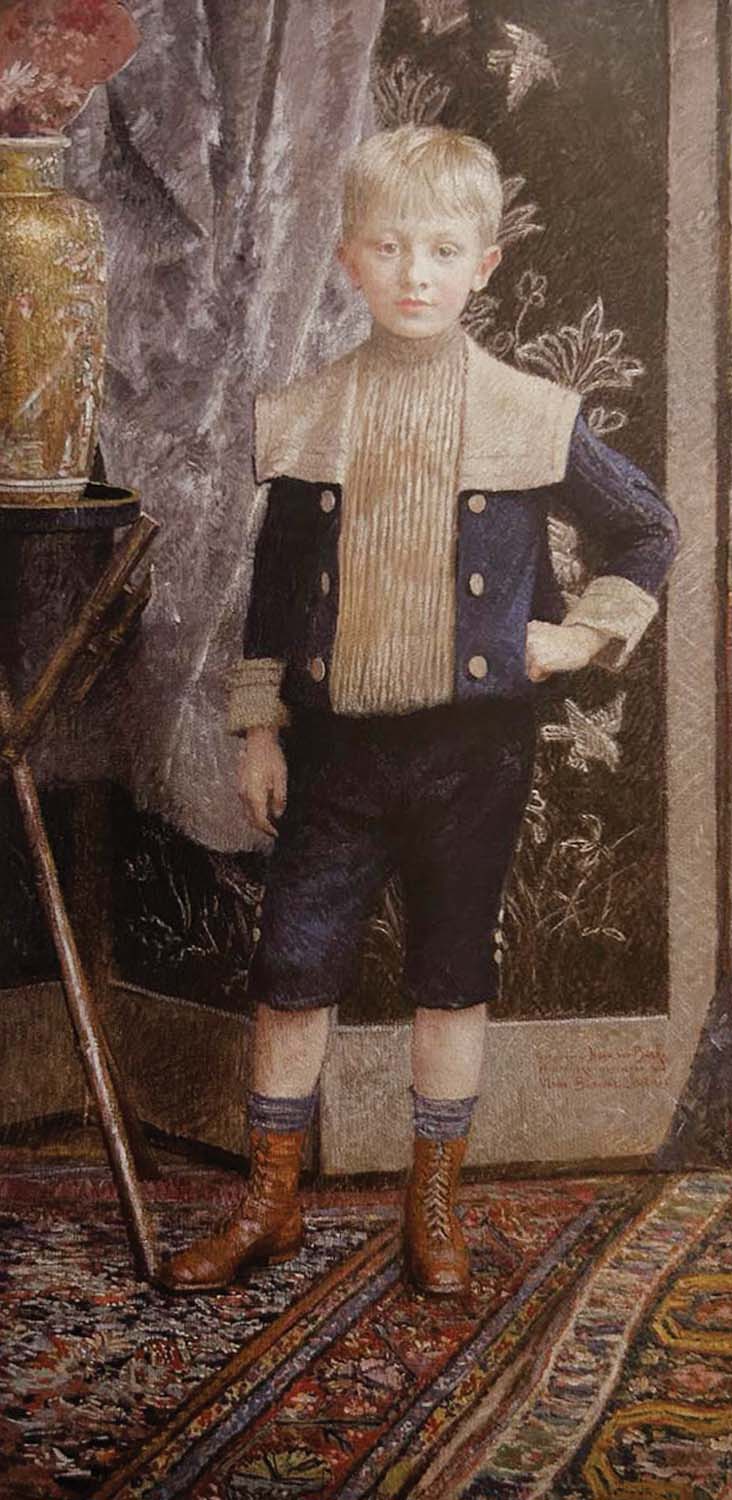
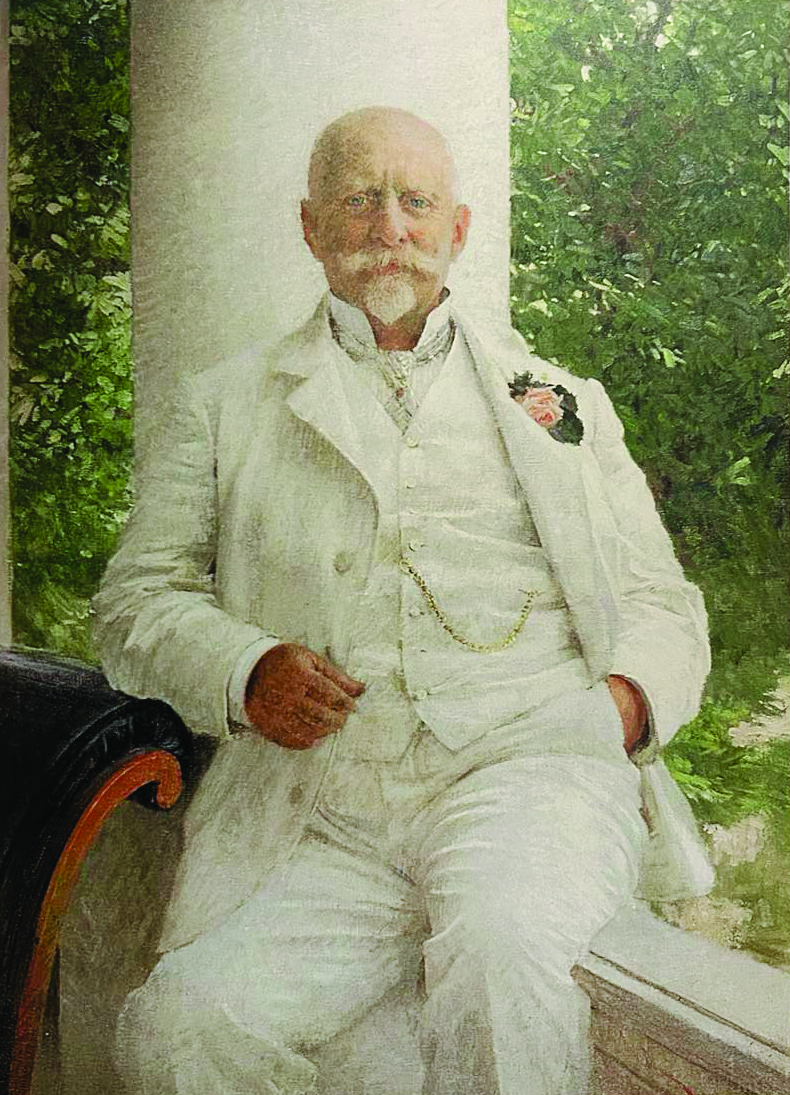
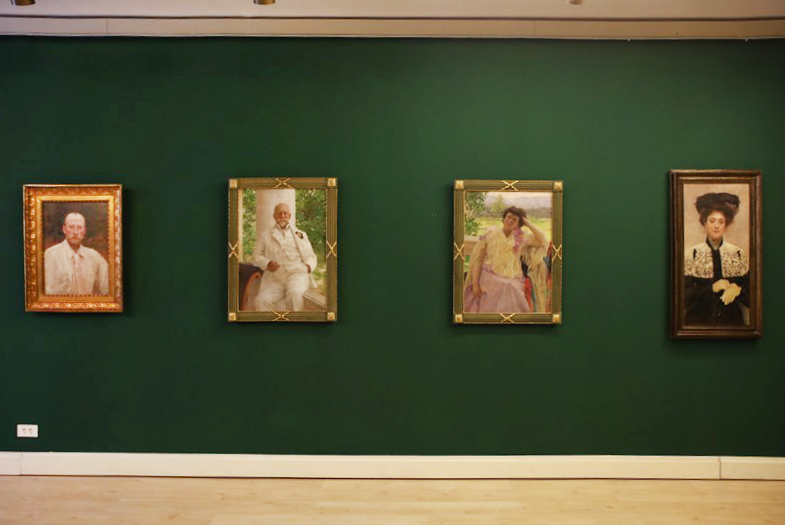
- The painting was cataloged and reproduced for the first time in the monograph "Vlaho Bukovac / life and work" by the author Vera Kružić Uchytil in the chapter "Bukovac in Vienna" under the number K-743 on page 259. In the description and valorization of this painting, the author of the monograph states: Recently discovered paintings of the von Berks family, Bukovac's friends, confirm all the above-average artistic qualities of his "Viennese intermezzo". He painted the portrait of Mara von Berks in 1904 in their castle in the typical Bukovac's free and spontaneous way of interpretation, as he paints when he is in close relationship with the model. (...) It should be added that Mrs. von Berks at the time of portraiture was not a young lady, of whom there are a considerable number in Bukovac's oeuvre, and her portrait is an excellent example of the painter's fascinating skill of portraying both older and younger personalities, influential protagonists of social life and children who are only on the verge of entering the society of adults. The aforementioned paintings of the Berks family prove this best. Because, it is a triadic unity consisting of figure portraits: Mrs. Mara - masterfully painted in a white that is translucent dress as she poses casually on the terrace of the Reifenstein castle, Mr. Hugo von Berks - virtuously immortalized knight in a formal white suit as he sits on the fence of the same terrace and seriously directs his gaze toward the portraitist, and the boyish figure of von Berks, their son at age ten - painted a year earlier in Bukovac's Viennese studio. It should be mentioned that all three portraits were very often exhibited together at the most representative exhibitions of Bukovac's oeuvre in Croatia and abroad. But we will only emphasize for this occasion that in the selection of Igor Zidić the painting Portrait of Mara von Berks was represented and reproduced in the exhibition catalogs: "Vlaho Bukovac - retrospective" in the National Museum in Prague 2000, then at the exhibition "Vlaho Bukovac - cosmopolitan Croatian" in the Geemente Museum in The Hague 2009 and at the repeat of the exhibition at the Klovićevi dvori in Zagreb 2010, and that in the selection of the authorial team of the exhibition "Bukovac - roots and wings in Zagreb, Cavtat and Vienna" it was exhibited again at the Gallery Klovićevi dvori 2022. About the "Viennese intermezzo" of Vlaho Bukovac, or about the one-year stay and work of the painter in the Austrian metropolis - after he suddenly left Zagreb in 1898 and withdrew to his hometown Cavtat, and four years later he went to Vienna - we have to say immediately that the local artistic production, culture and even climate did not make him happy, on the contrary they were foreign and uninspiring to him. He longed for a warmer, culturally closer environment in which he will find more understanding for his work and in which he can finally teach younger generations his mastery of painting. Of course, he exhibited, and for the solo exhibition held in 1903 in the Salon Artinov he harvested an extensive review with reproductions in the Kunst magazine, and he continued to paint in his own version of post-impressionistic expression old friends, rare new acquaintances and family members. For example, apart from the von Berks', the paintings Portrait of Marica Perović (City Museum Vukovar), Portrait of Laura Urpany (private ownership) and Son Ago in a sailor suit (private ownership), but also a first-class painting Adio (Art Gallery Dubrovnik), which shows his wife Jelica at the exit door of the studio with a view towards the observer, were created in Vienna during 1903. And indeed, with this painting Bukovac said goodbye to Vienna. In the fall of 1904, he finally received an invitation from the Prague Academy of Arts and Vlaho Bukovac readily accepted teaching work at the painting department, which will prompt a significant number of younger generation Croatian painters to knock on the door of his class. He did not falter with painting in the studio and already in 1905 Vlaho Bukovac painted, writes Igor Zidić, a large painting called Divan, an anthological demonstration of the penetrability of his eye and the power of his hand. BRP
- bio
- Vera Kružić Uchytil, Vlaho Bukovac / Life and Work, Publishing House Globus, Zagreb, 2005, p. 417 I. Zidić, Vlaho Bukovac / 1855-1922 (monograph), Moderna and Večernji Edition, Zagreb, 2009, p. 109.
- dimensions
-
- width: 63 cm
- height: 85 cm
- research_info
- The work was exhibited along with two other portraits of the von Berks family at the Kunsthaus in Vienna, 1905. The work was exhibited at the "Vlaho Bukovac" exhibition, Igor Zidić, Národní Muzeum, Prague, 2000. The work is reproduced in the monograph Vera Kružić-Uchytil, "Vlaho Bukovac - Life and Work: 1855. - 1922.", Nakladni zavod Globus, Zagreb, 2005., p. 259., cat. no. 743. The work was exhibited at the "Vlaho Bukovac – a cosmopolitan Croat" exhibition, Gemeente Museum, The Hague, 2009. The work was exhibited at the "Challenge of modernity: Zagreb–Vienna around 1900. Painting, sculpture and architecture of Zagreb and Vienna secession", Klovićevi dvori, Zagreb, 2017, and is mentioned in the exhibition catalogue on p. 293, cat. no. S29. The work was exhibited at the "Bukovac – roots and wings in Zagreb, Cavtat and Vienna" exhibition, Klovicevi Dvori, Zagreb, 2022 and is reproduced in the exhibition catalogue on p. 319. Mara von Berks (1859-1910), known as Mara Čop or Mara Čop Marlet, was a significant writer and ethnographer who gained fame in the high circles of Vienna, Budapest and Zagreb in the late 19th century. A member of numerous societies such as the Hungarian Folklore Society, the Gypsy Research Society and the Académie Internationale des Palmiers - which she joined especially after the publication of her study "South Slavic Women" in 1888, Mara Čop maintained a rich literary and publishing activity until the end of her life. Whether as a playwright, with successful dramatic work performed in theaters in Vienna, Stuttgart, Prague, Brno, Munich, Olomouc and Ljubljana, a novelist, or as one of the first Croatian ethnographers or investigative journalists, Mara von Berks left behind an important written corpus, which makes her one of the most exceptional individuals at the turn of the 19th century. In the second part of her life she married (1894) Hugo von Berks (1841, Ogulin - 1906, Reifenstein Castle), a member of the Austrian imperial court with a military background, notable landowner and businessman (in mining). Together they had a son Hugo Robert von Berks.
- dating
- 1904.
- provenance
- created in 1904 for the von Berks family, as part of a triptych of portraits: Mara, Hugo and their son Hugo Robert; early 2000s, private collection in Lausanne, Switzerland; significant collection from Zagreb.
INFORMAȚII SUPLIMENTARE
Fotografiile lotului sunt informative și orientative, neputând să asigure o vedere extrem de detaliată a obiectului din toate unghiurile. Recomandăm inspectarea fizică atentă a lotului înainte de licitare. Informații suplimentare în legătură cu starea de conservare, altele decât cele evident vizibile în fotografia/fotografiile lotului, disponibile pe calea formulării unei solicitări aici.
Pentru neclarități în legătură cu procedura de licitare, costurile adjudecării, termenii de garantare, de plată și de ridicare a lotului adjudecat recomandăm citirea/recitirea cu atenție a Regulamentului de Licitare.
Pentru informații suplimentare în legătură cu lotul și licitația contactați Departamentul de Consultanți de Artă.