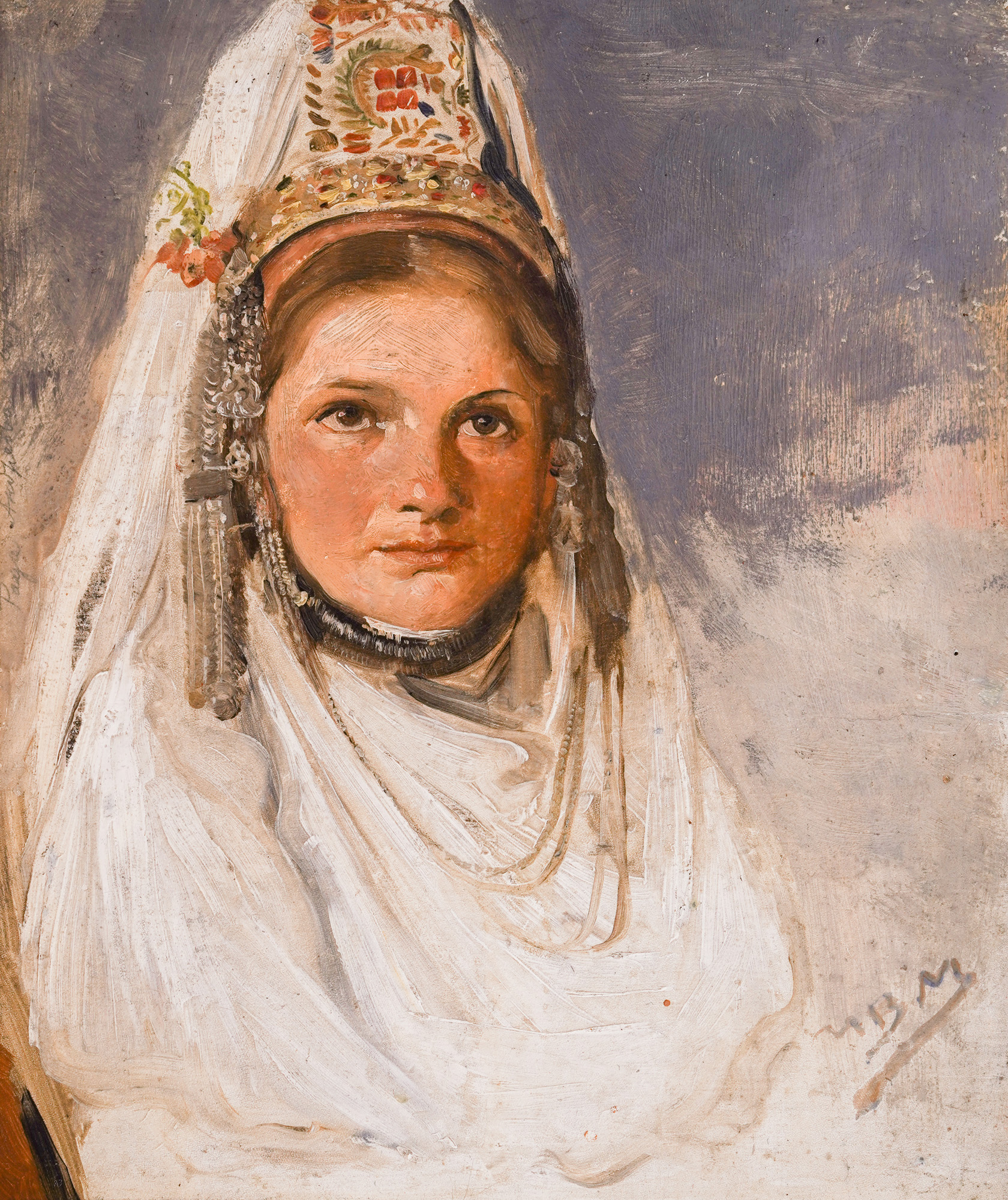
6C. Woman from Bojentsi (Rada Andreeva) [after 1895]
-
lambidis-silverware lambidis-silverware
lot.sold:
11.000,00 EUR
lot.estimate:
6.000,00 EUR -
9.000,00 EUR
lot.sold:
11.000,00 EUR
- signature
- signed bottom right, in grey, "ИВМ“
- medium
- oil on wood
- description
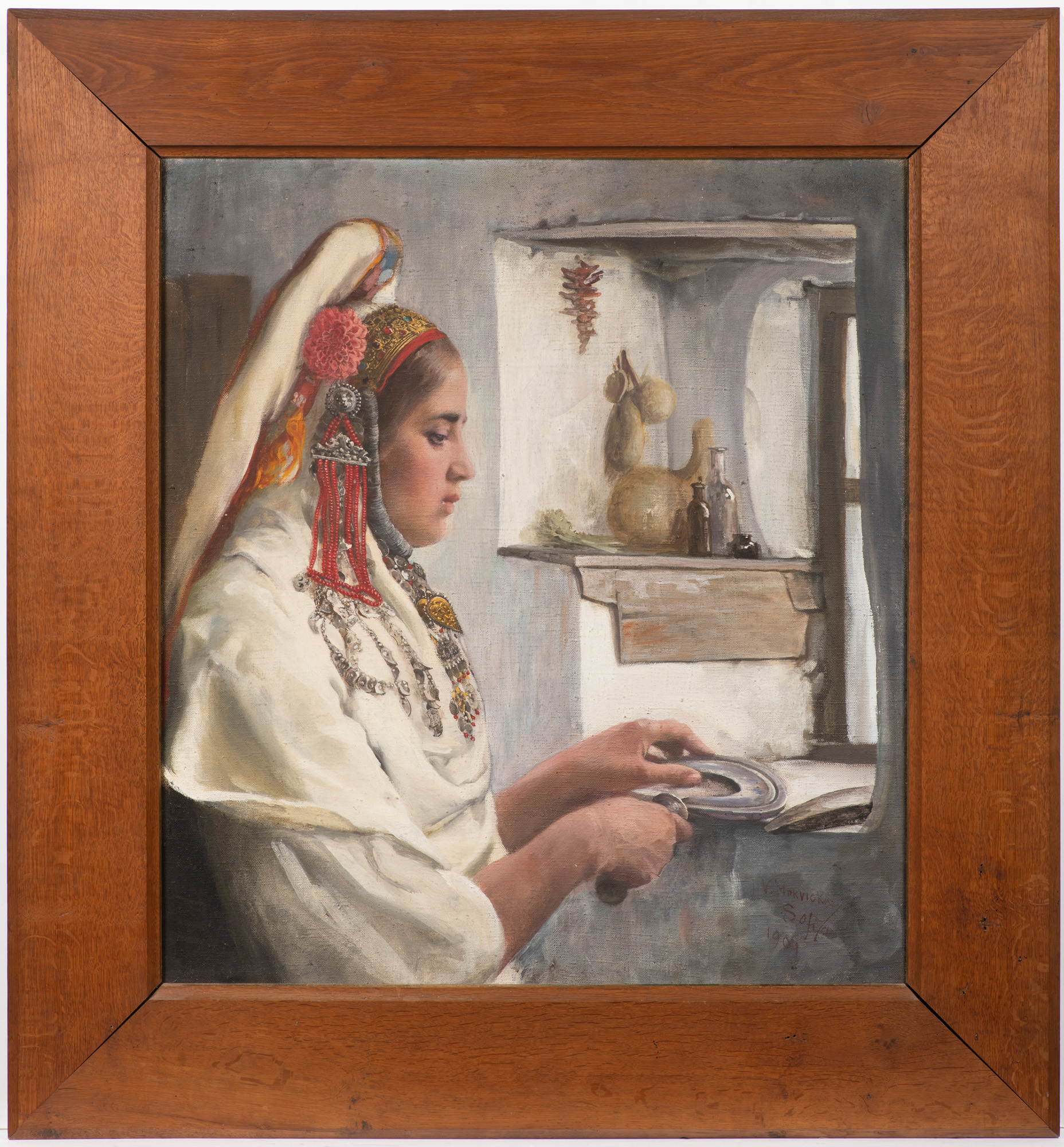
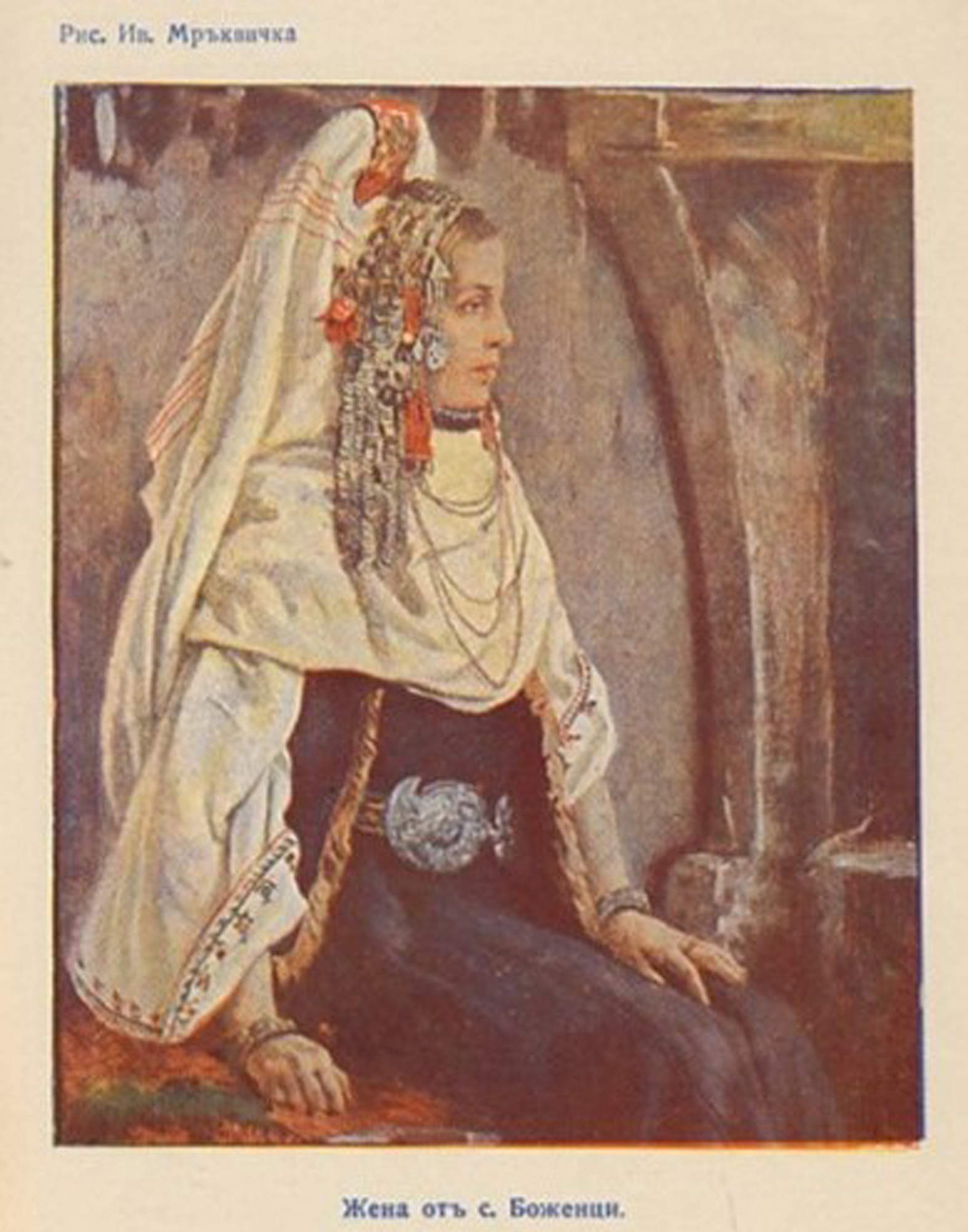
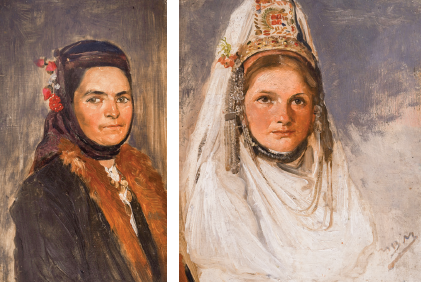
- The creativity of Ivan Mrkvichka is deeply connected with Bulgarian traditions, customs, folk psychology, images, clothes and cultural perceptions. Initially invited to Bulgaria as a drawing teacher in Plovdiv in 1881, later among the founders and first director of the Drawing School in Sofia in 1898, Mrkvichka was a public figure, an important and respected figure in the cultural environment of Post-Liberation Bulgaria. In the first years after his arrival in Bulgaria, the artist was prompted by his desire and interest in Bulgarian culture. Culture, which he reveals in the Bulgarian costume, ornaments and images from the different regions of the country. After his arrival in Plovdiv, the Czech-born painter depicted scenes and types from the city and the region. It is inspired by the diversity and variety of markets, assemblies and rituals. They are themes in his multi-figure compositions in the works from the SGHH collection - "Пловдивски пазар", "Шопско хоро", "Задушница" and others. Since the 1890s, Ivan Mrkvichka's creative interests have been focused on the portrait genre. Through portraiture, the painter looks deeper into the images and their characteristic features. Distinctive for his works from this period is the academic handwriting in the construction of the types. Mrkvichka makes portraits of public figures, cultural figures and others, but as if presenting the person from the small town or village, the artist dives deeper into the essence of the personality. During his travels, Ivan Mrkvichka purposefully searched for his inspiring models. In addition to beauty, he was also attracted by the specific, distinctive characteristics of the image. For the creation of the painting "Woman from Bozhentsi (Rada Andreeva)", Mrkvichka was greatly intrigued by the mayor's wife - Rada Andreeva. The woman's name and location are written in pencil in the upper left corner of the work. The story tells how in 1895 the artist visited the Gabrovo region because he was impressed by the local sokay. The sokay is a traditional part of the Bulgarian cloth women's costume for the Middle Stara Planina region, especially for Tryavna, Lovech and Gabrovo. It is worn by married women usually a few days after the wedding. In fact, the sokay appeared not only as a mark of a married woman, but also as an amulet. At the beginning of the 19th century, it was replaced by a headscarf - a cotton or silk scarf in white, light blue, green or brown color. Because of this, to this day there is very little visual evidence of what the sokay looked like and how it was worn. Most likely precisely because of its specificity and rarity, Mrkvichka has shown a strong interest in its depiction. In search of the most suitable married woman on whose head to place the sokay, he is impressed by the beauty of Rada Andreeva. In order for the girl to be drawn, her husband had to give permission to the artist. At first, he did not agree, but Rada's mother insisted, because according to her, it is very common for an artist like Mrkvichka to wish to be a character in his work. The artist created several portraits of the woman with the sokay. One of which we find in the book "From the social and cultural past of Gabrovo" with author Petar Tsonchev from 1934. It is known about this painting as well as about the sokay worn by it, that from the beginning of the 20th century is in the collection of the Ethnographic Museum, but was destroyed during the bombing of Sofia in 1944. Another portrait of Rada, adorned with a sokay, was sold at an auction in Prague in 2021. An exciting discovery for the history of Bulgarian art is that for the first time two works, which were originally one painting, are being presented to the public. These are "Woman from Bozhentsi (Rada Andreeva)" and "Woman from Bozhentsi" (lot 27) from the current Spring Auction. Regarding the history of the creation of the painting of Rada with the sokay, it follows that her mother is portrayed in the work under lot 27. The decision to separate the two paintings may have been made both by Ivan Mrkvichka himself and by the portraits themselves. The work "Woman from Bozhentsi (Rada Andreeva)" is an example of Mrkvichka's creative interests and skills from the period at the end of the 19th century. His task of perpetuating folk types and distinctive ornaments is fulfilled in the work presenting Rada Andreeva from Bozhentsi. The deep gaze and the beautiful sokaу reveal to the viewer the image of a woman who was undoubtedly an inspiration for the artist Ivan Mrkvichka. (A.M.)
- dimensions
-
- width: 18 cm
- height: 20.5 cm
- research_info
- The artwork is classified as cultural value, according to the certificate of identification.
- dating
- after 1895
INFORMAȚII SUPLIMENTARE
Fotografiile lotului sunt informative și orientative, neputând să asigure o vedere extrem de detaliată a obiectului din toate unghiurile. Recomandăm inspectarea fizică atentă a lotului înainte de licitare. Informații suplimentare în legătură cu starea de conservare, altele decât cele evident vizibile în fotografia/fotografiile lotului, disponibile pe calea formulării unei solicitări aici.
Pentru neclarități în legătură cu procedura de licitare, costurile adjudecării, termenii de garantare, de plată și de ridicare a lotului adjudecat recomandăm citirea/recitirea cu atenție a Regulamentului de Licitare.
Pentru informații suplimentare în legătură cu lotul și licitația contactați Departamentul de Consultanți de Artă.