56. In front of the inn [1899]
-
lambidis-silverware lambidis-silverware
lot.sold:
28.000,00 EUR
lot.estimate:
8.000,00 EUR -
15.000,00 EUR
lot.sold:
28.000,00 EUR
- signature
- signed, dated, inscribed and location bottom left, in pencil, "Вешинъ, 1899, Скица, София“
- medium
- watercolor, gouache and pencil on paper
- description
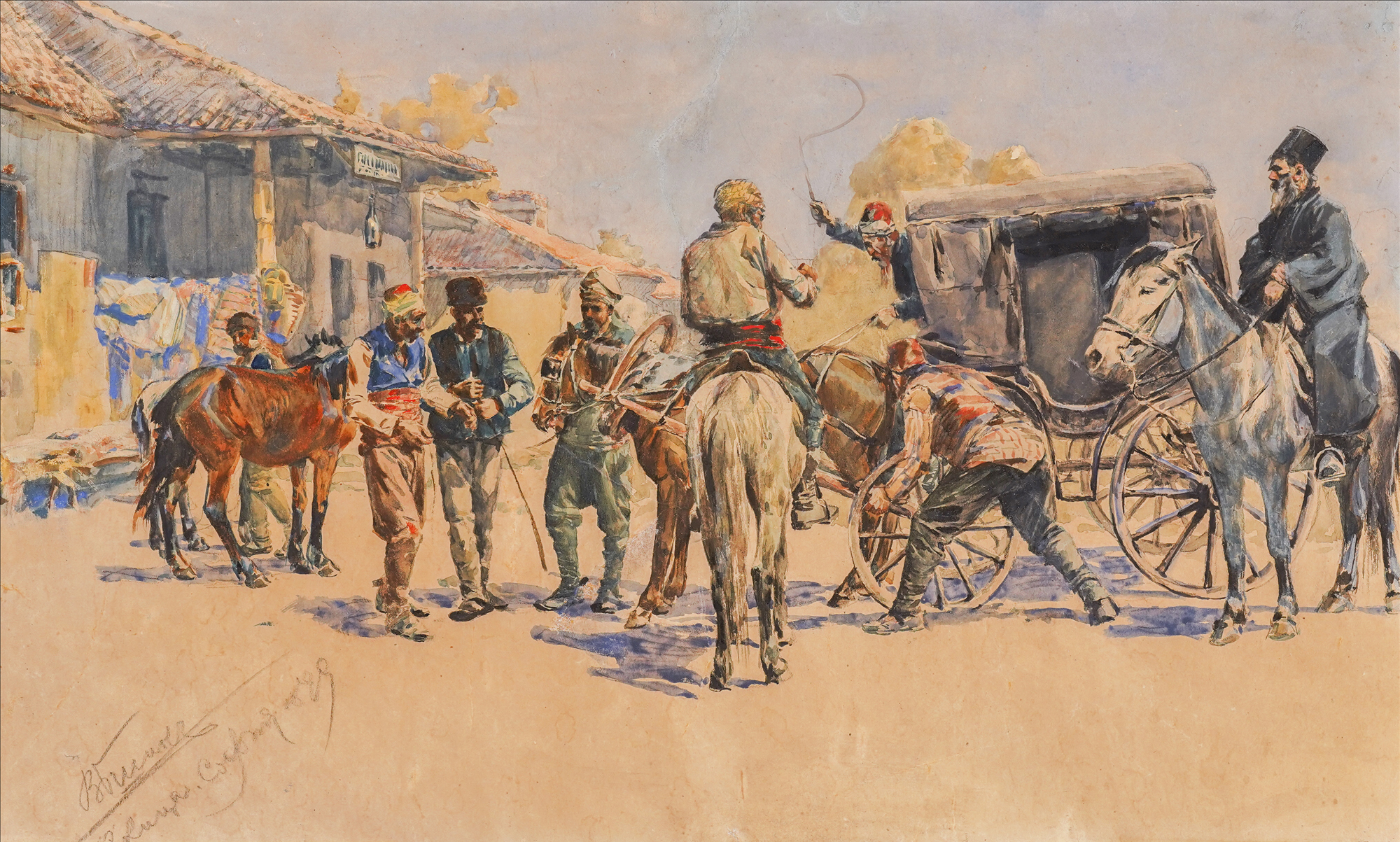
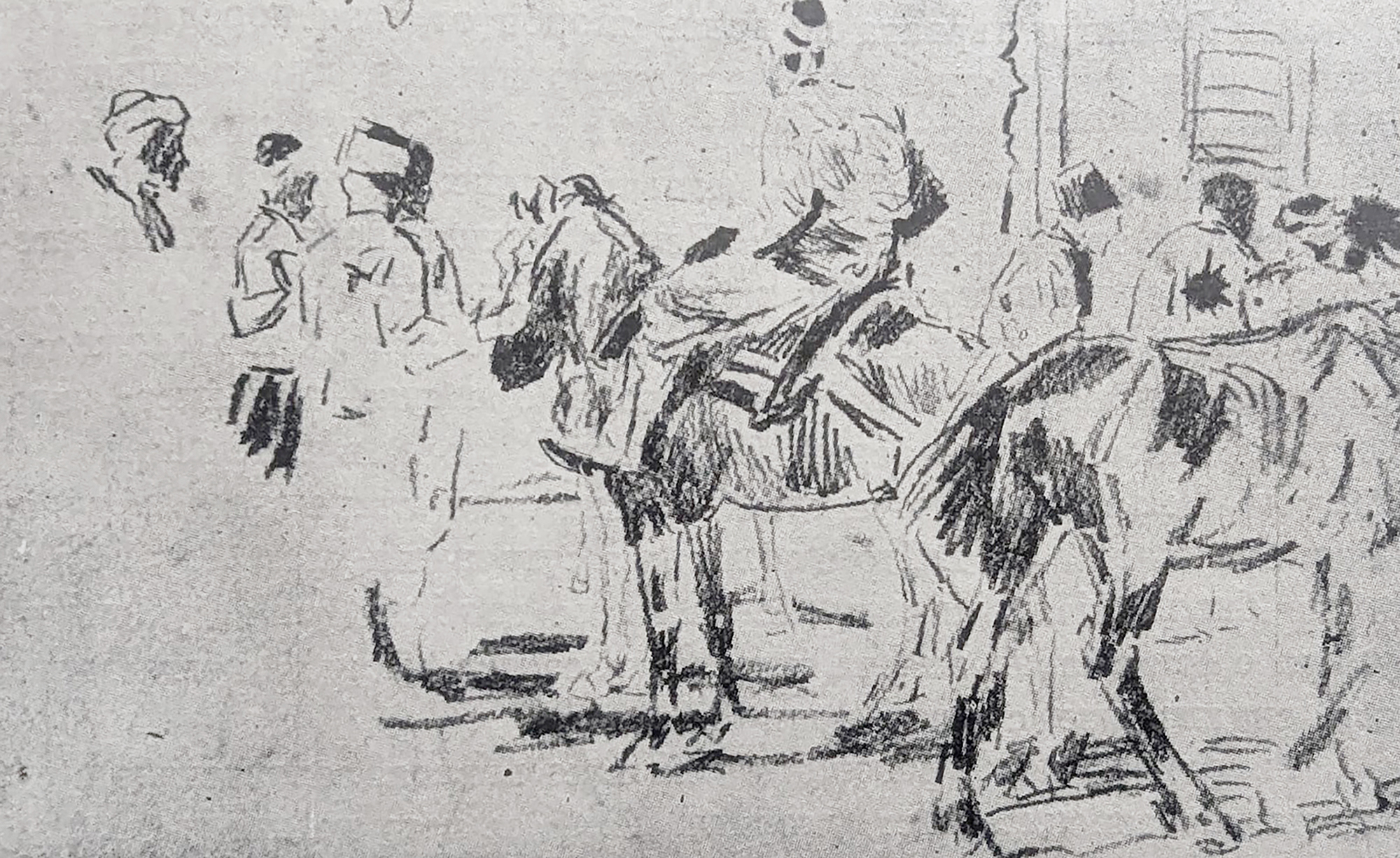
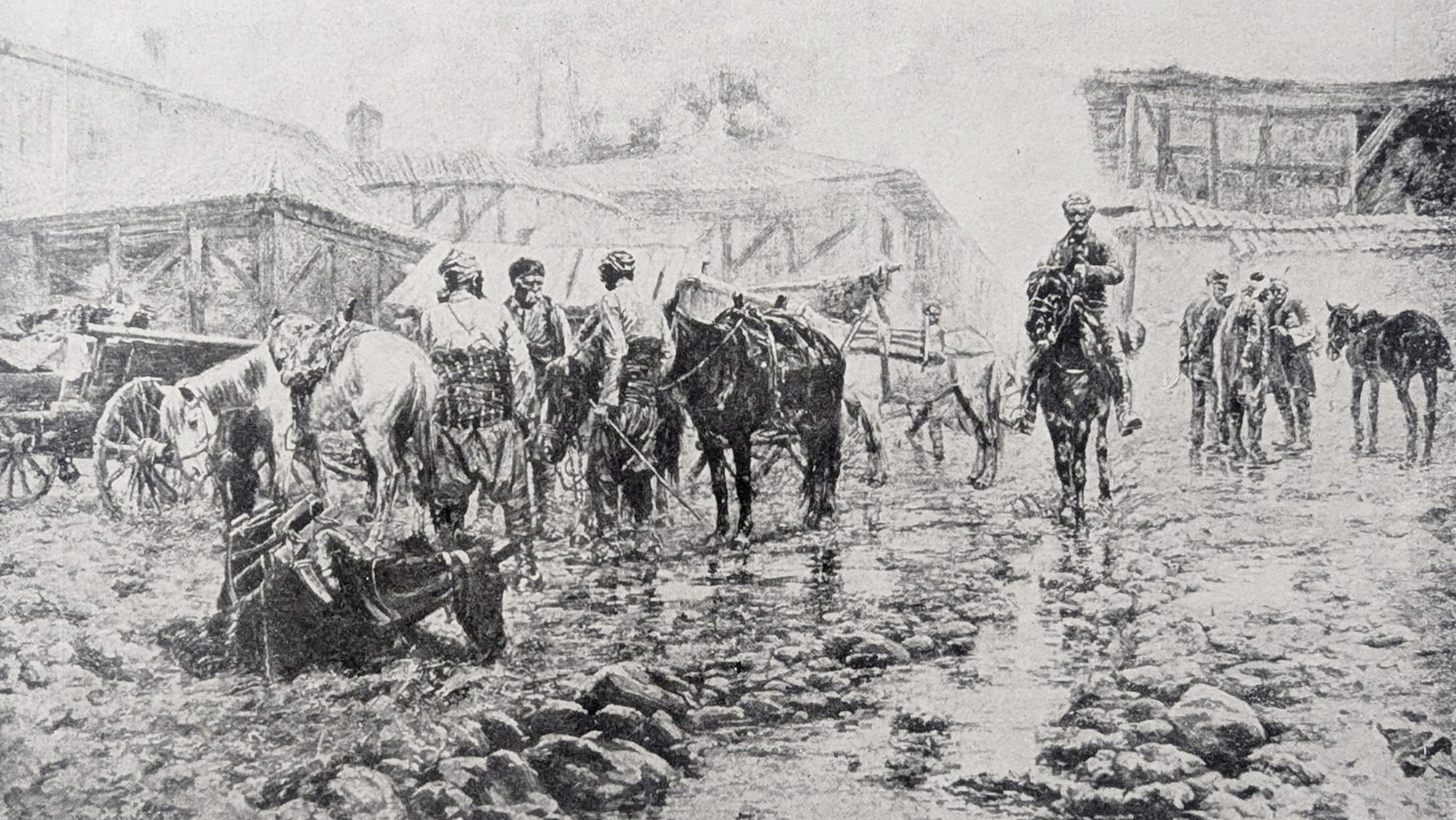
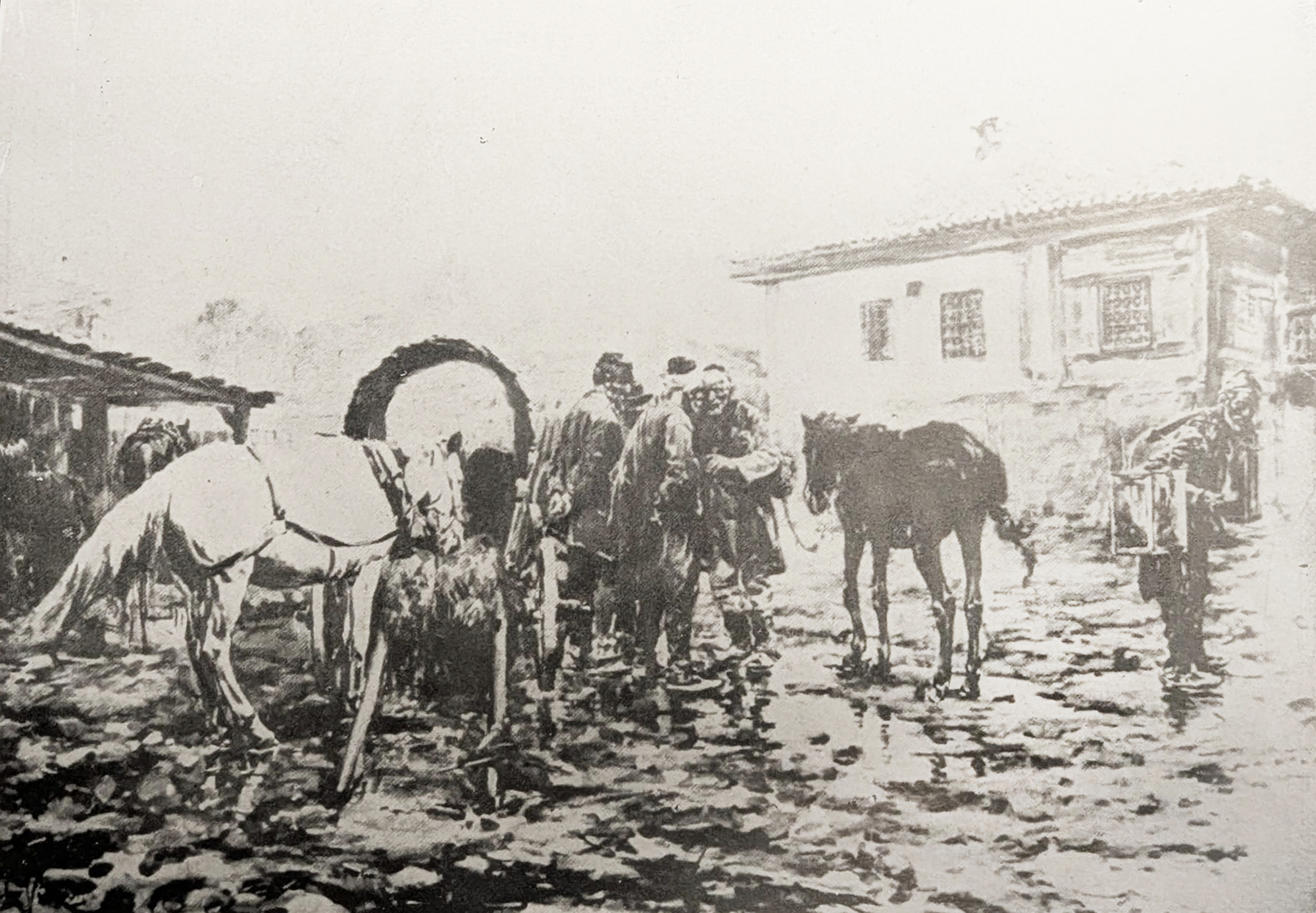
- The Czech artist Jaroslav Veshin moved to Bulgaria at the end of 1897, a little over a year after receiving the initial invitation from the then Minister of Public Education Konstantin Velichkov to become a teacher at the newly opened State Drawing School in Sofia. Veshin held this position until the end of 1903, and it was during this period that he created some of the most significant works of his artistic career. One of the main themes in his work from this period is market and domestic scenes, depicting not only the life of Bulgarians in the rural and provincial areas of the country but also the social relationships between different structures of society and their interaction with the surrounding reality. Such ideas are demonstrated in Veshin's watercolor "In Front of the Inn" from 1899. In this work, we not only see various representatives of Bulgarian provincial society from the late 19th century but also how they divide the work into three groups, allowing us to trace and understand the composition. On the left side of the painting, we notice three figures walking away from the inn behind them and stepping forward toward the foreground of the painting. Behind them is a figure who we can assume is leading the horses of some of the characters who have dismounted in front of the inn. However, their path is blocked by another horse, which is being whipped by its owner, who, together with the priest beside him, forms the second group of figures in the right part of the watercolor. Here we also see a peasant adjusting one of the wheels of the cart—the possible problem that causes the carter to use his whip on his horse. In the middle of the artwork, with his back to the viewer, is the figure of a rider, who separates these two main groups in the painting and completes the compositional frame of the work. Despite the sketch-like nature of the watercolor, we can consider this central figure as the Bulgarian standing at the center of the turbulent and dynamic reality of provincial life in the country during this period. In front of the inn, a variety of lively and dynamic Bulgarian figures are depicted, deeply and naturally connected to their surrounding provincial environment—from the priest observing the tense situation with the cart, to the inn servant leading the horses of the three figures engaged in conversation. Many similar types and compositions can be found in Veshin's pencil drawing, reproduced in the 1955 catalog by Mara Tsontcheva on page 49. Another theme that the Czech artist presents in his work is the connection between the rural person and the horse. As in other oil paintings from the same year (1899)—"In Front of the Market" and "Market in Edirne"—Veshin shows the horse as the main character, the animal on which the Bulgarian most relied during these years. In the presented watercolor, the horse is a reliable means of transport (in the case of the priest and the figures in front of the inn), a hard worker (in the case of the group with the cart), but also a faithful companion in a person's life, as shown in the central group with their back to us. Here, the person and the horse navigate together through the dynamic, fast-paced, and sometimes difficult reality of provincial life in Bulgaria. "In Front of the Inn" not only depicts these important relationships between humans and animals in the social setting of post-liberation Bulgaria but also the artist's mastery of watercolor, creating exceptionally lively and individual images that immerse us in what the country looked like during this period. (M.Z.)
- bio
- Tsoncheva, Mara (1955). Yaroslav Veshin, life and work. Sofia: Bulgarian Artist Publishing House
- dimensions
-
- width: 58.5 cm
- height: 35 cm
- dating
- 1899
INFORMAȚII SUPLIMENTARE
Fotografiile lotului sunt informative și orientative, neputând să asigure o vedere extrem de detaliată a obiectului din toate unghiurile. Recomandăm inspectarea fizică atentă a lotului înainte de licitare. Informații suplimentare în legătură cu starea de conservare, altele decât cele evident vizibile în fotografia/fotografiile lotului, disponibile pe calea formulării unei solicitări aici.
Pentru neclarități în legătură cu procedura de licitare, costurile adjudecării, termenii de garantare, de plată și de ridicare a lotului adjudecat recomandăm citirea/recitirea cu atenție a Regulamentului de Licitare.
Pentru informații suplimentare în legătură cu lotul și licitația contactați Departamentul de Consultanți de Artă.